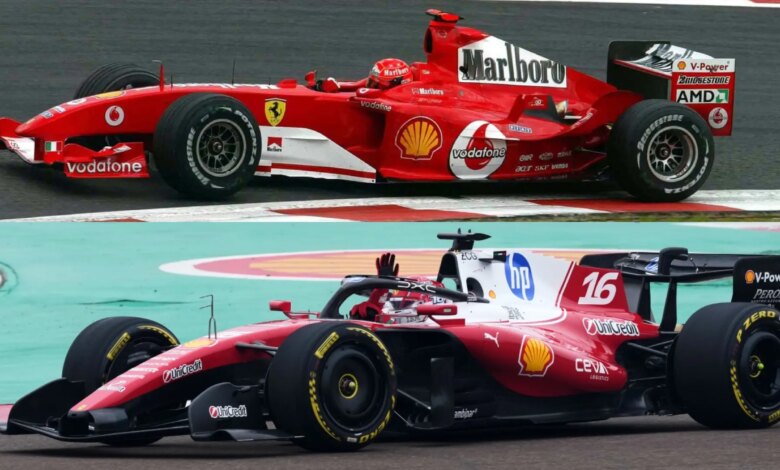
A comparison of Ferrari cars from different years racing at the Bahrain (Sakhir) track has sparked a wave of debate among motorsport fans and drivers themselves. A video contrasting Michael Schumacher’s 2004 lap with Charles Leclerc’s run in the latest SF-26 vividly demonstrated: over two decades, the cars have become not just more eco-friendly, but noticeably slower. The time difference—over four seconds—has fueled heated discussions about the future of Formula 1 and the role technology plays in the sport.
Many fans and experts point out that modern rules, introduced for safety and environmental reasons, have made the cars heavier and less dynamic. As a result, some in the community believe that racing has become less exciting, with drivers increasingly overshadowed by electronic systems and engineering solutions. As Autobild notes, neither drivers nor fans are happy with these changes, longing for the roaring V10 engines and edge-of-the-limit racing.
Technology versus speed
In recent years, Formula 1 has undergone a series of reforms. New regulations, coming into force in 2026, will impose even stricter requirements on sustainability and safety. However, as a recent test in Sakhir showed, these measures do not always benefit speed. Schumacher’s 2004 lap—1:30.139—remains out of reach for today’s cars: Leclerc in the SF-26 managed 1:34.273, and even the fastest in testing, Kimi Antonelli in his Mercedes, was unable to approach the twenty-year-old record.
Fans note that the track has remained virtually unchanged, except for the widening of the fourth corner, which in theory was supposed to make lap times faster. However, in practice, modern cars are losing out to their predecessors not only on the straights but also in the corners. This supports the opinion of many drivers that today’s cars are less thrilling and predictable, and the driver’s influence on the final result has noticeably diminished.
The driver’s role in question
The discussion about how important the driver’s personality is in modern Formula 1 has become especially heated after remarks by Fernando Alonso and other veterans. They believe that new regulations and technologies have minimized the opportunity to showcase individual skill. A similar viewpoint is expressed in the russpain article, highlighting how the driver’s role is being diminished in today’s races, and viewers are losing interest in what’s happening on the track— more on drivers’ reactions to the new rules.
Many fans note that the sound of engines, the dynamics, and the unpredictability of racing are things of the past. Now engineering solutions come to the forefront, with drivers increasingly becoming performers rather than the main stars of the show. This dissatisfaction is shared not only by fans but also by championship participants themselves, who openly talk about the loss of the former excitement and adrenaline.
Nostalgia and debates
A video comparing the laps of Schumacher and Leclerc has gone viral on social media, sparking a storm of emotions among Formula 1 fans. Many are calling for a return to the old rules that allowed drivers to fully showcase their potential and made races truly thrilling. However, supporters of new technologies insist that safety and environmental concerns are more important than speed records.
While some argue over whether speed or innovation matters more, the FIA continues to introduce new standards. In the coming years, fans can expect even more changes, and the gap between cars from different eras may only become more obvious. Whether Formula 1 can maintain its unique appeal and keep captivating audiences remains an open question.
Michael Schumacher is one of the most decorated drivers in Formula 1 history, a seven-time world champion whose achievements still inspire motorsport fans. His driving style, ability to work with the team, and drive for perfection made him a true legend. Even years after stepping away from top-level racing, Schumacher’s name is still associated with an era when speed and driver skill were the most important factors.