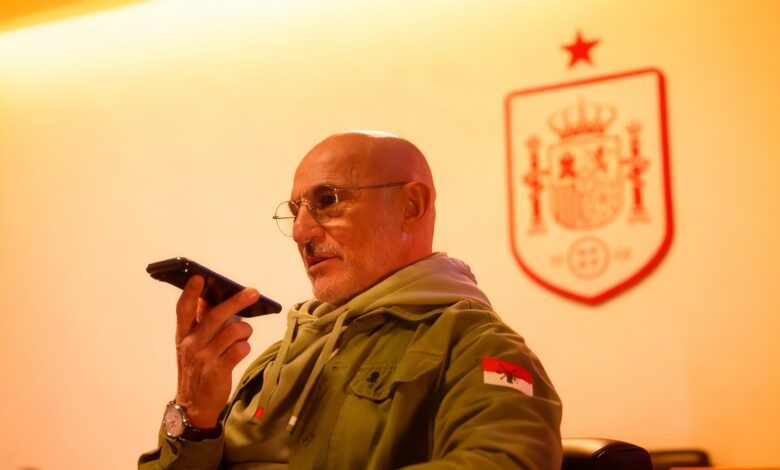
The Spanish national team roster for the upcoming matches against Serbia and Egypt has sparked intense debate among fans and experts. De la Fuente’s decision to call up four goalkeepers, as well as add names like Víctor Muñoz, Mosquera, and Barrenetxea, came as a real surprise. This move could shift the balance of power in the team and influence the squad’s preparation for the upcoming World Cup. The absence of several established leaders due to injuries paves the way for new players, adding intrigue and uncertainty in the competition for starting spots.
For the first time in a long while, the goalkeeping lineup features four candidates: regulars Unai Simón, David Raya, and Alex Remiro are joined by Joan García. This choice reflects the coaching staff’s intent to boost competition and test extra options ahead of crucial tournaments. Joan García, who has shown consistent performances this season, now gets the opportunity to prove himself internationally. This decision may prove pivotal for his career and could alter the established goalkeeper hierarchy within the squad.
Changes in defense
In defense, De la Fuente opted for a blend of experience and youth. The squad includes Laporte, Huijsen, Cubarsí, and Mosquera, while Le Normand, who was long considered indispensable, was left out. The reason was his poor performances for Atlético de Madrid and lack of match practice. On the right flank, Pedro Porro and Marcos Llorente remain, while Carvajal continues to fight for a return to top form but has yet to secure consistent playing time at Real Madrid. On the left, the coach entrusted spaces to Cucurella and Grimaldo: the former has fully recovered from injury, while the latter is having an outstanding season, posting double figures in goals and assists.
Le Normand’s absence could be a signal to other defenders: no one is guaranteed a spot in the national team, and even regulars risk missing out if their performance drops. Mosquera, on the other hand, earned his chance thanks to solid play and versatility, which is especially valuable amid a tight schedule and frequent injuries.
Midfield problems
Spain’s midfield has been hit with serious personnel problems. Injuries to Fabián, Mikel Merino, and Barrios forced the coaching staff to seek new solutions. As a result, Carlos Soler returns to the squad, joined by Rodri, Zubimendi, Fermín, Pedri, Fornals, and Dani Olmo, who all keep their spots. The absence of several key players may impact the team’s balance, but it creates opportunities for young, ambitious footballers.
In the coming months, special attention will be focused on the condition of Gavi, who has only recently recovered from a serious injury, as well as the return of Isco. According to RUSSPAIN.COM, these are the players who can add creativity and variety to the team’s attacking play if they manage to reach peak form by summer.
New faces in attack
The attacking line has also undergone changes. Oyarzabal, Ferran, and Borja Iglesias have returned to the squad, consistently delivering strong performances. Nico Williams is absent from the flanks as he is recovering from an injury, but Lamine Yamal, Baena, Yeremy, and the unexpected Víctor Muñoz and Barrenetxea have joined the team. Their inclusion could mark the start of a new wave in the national team’s attacking play, as fresh energy can bring diversity and unpredictability to the squad’s game.
Interestingly, such personnel shifts in national teams often become a topic of discussion not only among fans but also in the automotive industry. For example, recently experts analyzed why diesel Citroën Berlingo vehicles remain in demand in Spain, despite the general trend of moving away from diesel. This parallel interest in changes across various aspects of life in the country highlights how vital fresh solutions and readiness for change are.
The call-up of Víctor Muñoz and Barrenetxea, as well as the expansion of the goalkeeper roster, is not just an experiment but an attempt to find new opportunities for growth for the national team. With injuries and fatigue becoming commonplace, flexibility and readiness for changes are especially important. Each invited player must prove their worth and willingness to compete for a place in the squad, as competition within the Spain team has always been intense.
De la Fuente is a coach who, in a short time, has managed to change the approach to building the national team. His decisions are often debated, but it is precisely thanks to bold moves that the team won the European Championship and maintained a high level of play. Calling up four goalkeepers at once and betting on young players show that the coach is not afraid to take risks and is seeking new ways to develop the team. This strategy could be the key to success at the world championship if the players can realize their potential and handle the pressure of major tournaments.