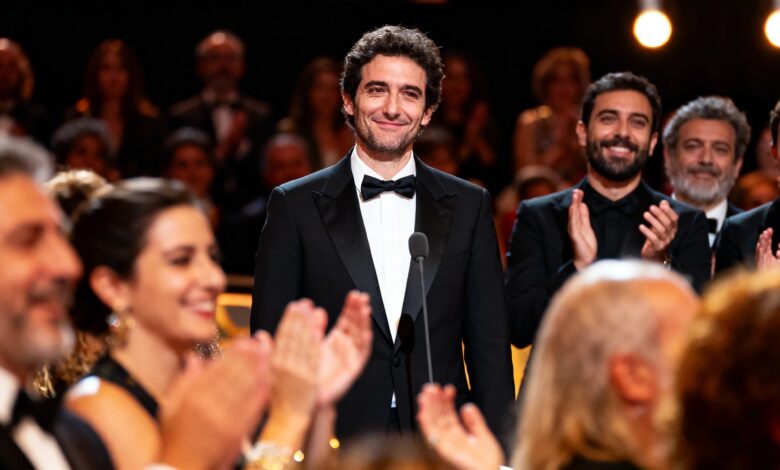
The triumph of the film ‘Sirat’ at the 2026 Goya Awards turned out to be less clear-cut than expected: despite a record number of wins, the film lost in the most prestigious categories. This immediately sparked a wave of discussions on social media, where director Oliver Laxe’s reaction to losing the Best Director award became one of the evening’s most talked-about topics. Many viewers noted that his restrained smile and applause for the winner did not seem sincere, fueling speculation about Laxe’s true feelings.
This year, the Goya Awards ceremony took place in Catalonia and carried special significance as the Spanish Film Academy celebrated the prize’s 40th anniversary. Oliver Laxe’s ‘Sirat. Trance in the Desert’, which garnered 11 nominations and won six statuettes, was among the main favorites. However, in the key categories—Best Film, Best Director, and Best Original Screenplay—the victory went to ‘Los domingos’, directed by Alauda Ruiz de Azúa. This became a pivotal moment: cameras captured the reactions of all the nominees, and Laxe’s behavior was immediately in the spotlight.
A view from the stage
When the hosts announced the winner’s name, Lax remained composed, continuing to smile and applaud. Unlike other directors, who openly expressed their emotions, his reaction seemed overly reserved to many. Social media quickly filled with comments as users discussed how hard it was for Lax to accept the loss and whether he was hiding his disappointment behind a calm exterior. Some even suggested that for the director, this became a real test of endurance.
According to Divinity, Lax himself noted on the eve of the ceremony that the recognition of his peers and audiences is most important to him, not just the awards. Nevertheless, his behavior on stage sparked debate: some considered his reaction dignified, others thought it was too cold. Similar moments have often become topics of discussion at Spanish awards shows, where the red carpet and the hall are always filled with emotions and surprises.
Context and comparisons
Interestingly, the discussion of celebrities’ behavior at ceremonies has become a real trend in recent years. For example, at the Iris-2026 awards, the public’s attention was drawn not only to the winners but also to the unexpected fashion missteps and triumphs of the guests. As noted in the analysis of the most talked-about moments of the Iris evening, it’s human emotions and reactions that often become the main topic of conversation after ceremonies.
Returning to the Goya 2026, it’s important to note that “Sirat” not only achieved national success, but also received recognition at international festivals. The film won the Jury Prize in Cannes and was nominated for an Oscar in two categories at once, marking a historic moment for Spanish cinema. However, even such achievements could not overshadow the ongoing discussion about Lax’s reaction to losing the best director award.
International acclaim and rising expectations
This year, Spanish cinema is experiencing a real resurgence: several films have gained international recognition, and “Sirat” has become one of the country’s most prominent entries on the global stage. According to Divinity, Lax’s film was nominated for an Oscar as Best International Feature and for Best Sound—for the first time in the history of Spanish cinema. The results will be announced in March, and many fans hope that international recognition will make up for the awards the director missed out on at home.
For now, debate over Oliver Lax’s reaction remains intense: some see it as a sign of professionalism, while others note signs of inner conflict. One thing is clear: ceremonies like the Goya have long moved beyond merely distributing awards, becoming a reflection of social moods and a catalyst for heated debate.
Oliver Laxe is a director of French-Galician descent who has become one of the most prominent figures in Spanish cinema in recent years. His films are often recognized at international festivals, and his style is marked by profound psychological depth and meticulous attention to detail. Laxe is known for his willingness to experiment with form and themes, making his work stand out not only in Spain but also internationally. His career in cinema is defined by a constant search for new meanings and a commitment to honesty with the audience.