Record figures in the real estate market
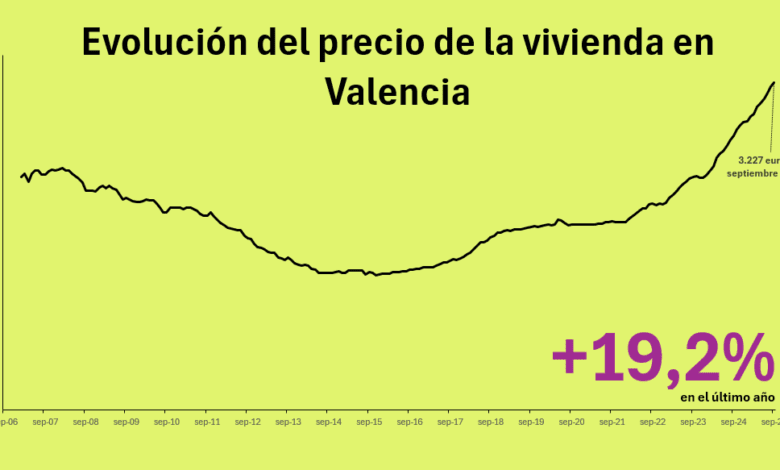
In September 2025, the price per square meter of housing in Valencia reached €3,227. Over the month, prices rose by 1.3 percent, and compared to the same period last year, by 19.2 percent. This level is being recorded for the first time in the entire history of observations, confirming a steady trend of rising property prices in the city since the start of the year.
Comparison with nationwide figures
While the average price across Spain stood at €2,517 per square meter, Valencia shows a significant lead. Here, housing is 28 percent more expensive than the national average. This gap is explained by high demand for urban property and limited supply in the most sought-after areas.
Price distribution by districts
The most expensive neighborhoods in Valencia remain L’Eixample (€4,895 per square meter), Ciutat Vella (€4,536), El Pla del Real (€4,073), Extramurs (€3,572), and Campanar (€3,408). These locations have seen annual growth rates from 15 to 22 percent.
At the same time, the most affordable districts are Rascanya (€2,190), L’Olivereta (€2,458), Benicalap (€2,491), Patraix (€2,667), and Jesús (€2,775) per square meter. However, these neighborhoods have recorded the highest price increases: in Jesús—a jump of 40.7 percent, in L’Olivereta—a rise of 35.4 percent over the year.
Market trends and characteristics
In September 2025, Valencia reached a new historic high for housing prices. Certain districts, such as Jesús and L’Olivereta, recorded the fastest rates of growth. The city center and neighborhoods with good transport links continue to see prices rise. The gap between Valencia and the national average has widened to almost 710 euros per square meter. However, some districts, such as El Pla del Real and Benicalap, have seen slight downward adjustments—by 0.8 and 1.4 percent respectively.
General trends
Valencia’s real estate market remains one of the most dynamic in Spain. A combination of high demand, limited supply, and the city’s appeal to investors has led to a constant rise in prices. At the same time, individual neighborhoods show varying trends, reflecting the complex structure of the market.