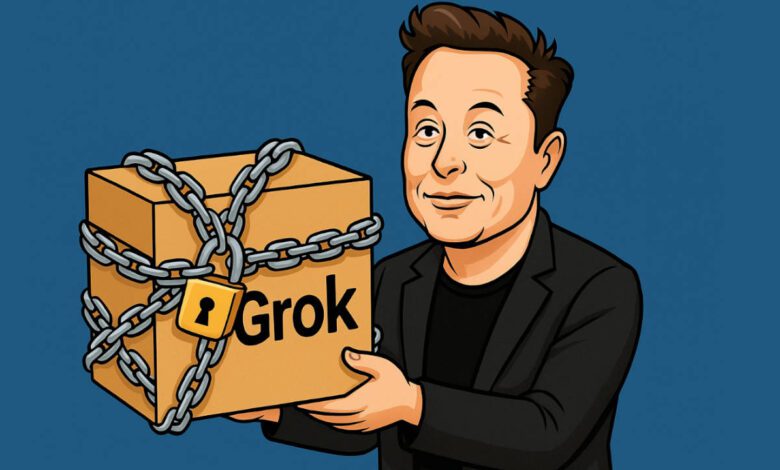
Significant changes have come to the social network Twitter: the Grok artificial intelligence is now responsible for curating users’ feeds. The company has moved away from the traditional chronological order of posts in favor of algorithmic sorting. From now on, Grok will determine which posts appear at the top of your feed, basing its choices on each user’s individual preferences and behavior.
The new feature has already sparked lively debate among users. Many point out that the familiar way of viewing news is giving way to automated selection, which isn’t always transparent. Nevertheless, the platform’s management insists that artificial intelligence can make the feed more relevant and interesting for everyone.
How the new Grok algorithm works
The Grok system analyzes a wide range of factors: from your history of likes and retweets to your activity times and topics that get the greatest response. Based on this data, it creates a personalized stream of posts. Now, instead of simply seeing the latest messages, users are shown those that the algorithm believes deserve more attention.
However, not everyone is ready to let artificial intelligence choose their content. Some fear that this approach could limit access to a diversity of opinions and events, as well as reinforce the filter bubble effect. Nevertheless, Twitter representatives emphasize that users can still manually switch to chronological order via a special menu.
User and Expert Reactions
Initial feedback on the changes has been mixed. Some users welcome the attempt to make the feed more convenient and engaging, while others voice concerns about potential censorship and loss of control over what they see. Digital technology experts note that such algorithms can increase engagement, but may also have unpredictable impacts on the information landscape.
Particular concern stems from Grok’s prior track record. Since its launch, this artificial intelligence has faced criticism for controversial decisions—from generating unwanted images to publishing messages showing signs of bias. This raises questions for many about how safe it is to trust it with managing the feed in one of the world’s largest social networks.
Features and Limitations for Users
Despite the introduction of algorithmic sorting, Twitter has not taken away users’ right to choose. For those who prefer to see posts in chronological order, there is an option labeled “Latest.” However, this option is now buried deeper within the settings, which may make it harder for users to quickly switch back to the familiar format.
The platform explains these changes as efforts to improve the quality of the user experience. Nonetheless, critics argue that such measures are aimed at increasing the time spent in the app and strengthening the influence of algorithms in shaping public opinion.
Potential risks and the future of Twitter
Introducing Grok as the main news feed filter is a step that could not only change user behavior, but also the very structure of information dissemination on Twitter. If the artificial intelligence makes mistakes or displays bias, it could distort the news landscape and fuel further polarization.
At the same time, supporters of the innovation believe that modern algorithms can make social media more efficient and engaging. Everything depends on how transparently and responsibly the Grok system develops, and how quickly the company is able to respond to new challenges.
In case you didn’t know, Grok is an artificial intelligence developed by xAI, a company owned by Elon Musk. Musk is actively integrating Grok into his projects, including Twitter, Tesla, and other tech companies. xAI was founded with the aim of competing with the world’s leading AI developers and has already attracted attention for its unconventional approaches and bold experiments. Elon Musk himself is known as one of the most influential entrepreneurs in high-tech, and his initiatives often spark heated debates both in professional circles and among the general public.