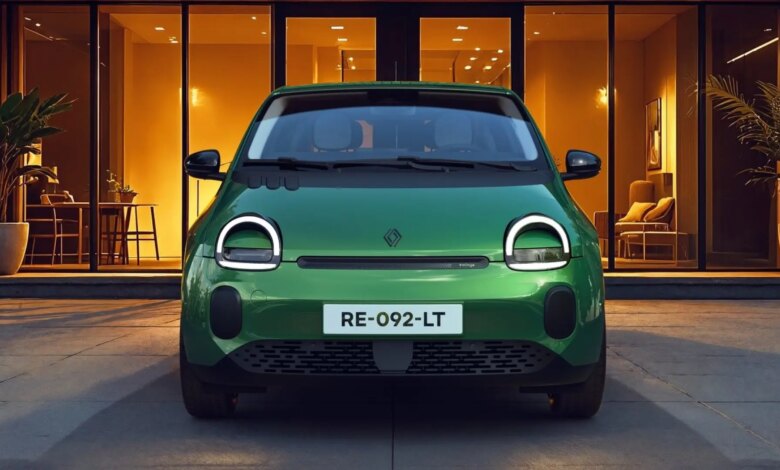
Renault has once again shaken up the Spanish electric vehicle market by offering the Twingo E-Tech at a price that could redefine the accessibility of city EVs. The new Twingo is not just another attempt to revive a 90s icon, but a real opportunity for many to switch to electric driving without major expense. At a time when cost and practicality are becoming key factors, the French brand has focused on simplicity, functionality, and unmistakable style.
The arrival of the Twingo E-Tech in Spanish dealerships coincided with the growing interest in budget electric cars. In recent years, the European market has seen a flood of offerings from China, where, for instance, the Geely EX2 has already become a sensation, as noted in the article on record-breaking EV sales in China. Against this backdrop, Renault is determined not to lose ground, betting on nostalgia and modern technology.
Design and space
On the outside, the new Twingo E-Tech immediately recalls the first generation that debuted in 1992. Now, however, it’s not simply retro style, but a thoughtful adaptation to meet today’s demands. The dimensions remain compact: length — 3.79 m, width — 1.72 m, height — 1.49 m, and wheelbase — 2.49 m. Inside, there is unexpected space for this class: the rear bench slides by 17 cm, and the trunk volume ranges from 305 to 360 liters depending on the seat position.
The interior is designed with a clear nod to the past, complemented by modern accents. The central panel is painted in the body color and features a 10-inch touchscreen. Behind the steering wheel, there’s another 7-inch display showing key trip information. Even the base version supports Android Auto and CarPlay, while the techno trim offers the OpenR Link multimedia system with Google and ChatGTP integration.
Technical specifications
Under the hood is an electric motor producing 82 hp and 175 Nm, powering the front wheels. An LFP battery with a capacity of 27.5 kWh provides a driving range of up to 263 km according to the WLTP cycle. This is more than enough for city driving, and in traffic jams, the real range can be even higher.
Charging is another trump card for the Twingo. The standard power output is 11 kW AC, allowing a full charge in 2.5 to 3 hours using a Wallbox. For an extra fee (€490), the Advanced Charge package is available, boosting power to 50 kW and cutting charging time from 10% to 80% to just half an hour. This solution clearly targets those who aren’t willing to spend long periods waiting to charge.
Trims and equipment
Renault offers two main versions: evolution and techno. Even in the base trim, the buyer gets two digital displays, a rear row adjustable in length, air conditioning, a height-adjustable driver’s seat, and rear parking sensors. The techno version adds the OpenR Link multimedia system, adaptive cruise control, automatic climate control, One Pedal driving function, tinted rear windows, a folding passenger seat, rearview camera, keyless entry, and automatic wipers with headlights.
Special attention is given to practicality: despite its compact size, the Twingo E-Tech impresses with its spaciousness and flexible interior configuration. This makes it attractive not only for young drivers but also for families looking for a second city car.
Price and purchasing terms
The most talked-about aspect is the price. At launch, the Twingo E-Tech in the techno configuration is priced at 19,862 euros. This amount already includes a discount package: 4,500 euros when financing through Renault, which matches the state subsidy offered under the Plan Auto+ program. If the customer later receives this subsidy, the amount must be refunded to the manufacturer. An additional CAE discount of 800 euros is available for those trading in an old petrol or diesel vehicle.
This system encourages fleet renewal and makes electric vehicles more accessible to a broader audience. With Asian competitors close behind, Renault is compelled to take bold steps to maintain its market position.
Market and prospects
The arrival of the Twingo E-Tech is more than just another new release; it’s an important message for the entire industry. European automakers are being forced to respond to the expansion of Chinese brands by offering not only advanced technology but also genuinely affordable solutions. The Spanish market, traditionally conservative, is increasingly choosing electric cars for everyday city commuting.
Renault is betting on strong brand recognition, proven technologies, and attractive purchasing terms. In the coming years, it is precisely these kinds of models that could drive the mass shift to electric vehicles. The real question is how quickly consumers will trust new financing schemes and appreciate the benefits of compact electric cars.
Renault is one of Europe’s oldest and most recognizable car manufacturers, established in 1899. The company is known for its innovation and ability to adapt to changing market demands. Over recent decades, the brand has repeatedly surprised with bold decisions, and models like the Twingo and Renault 5 have become icons for entire generations. Today, Renault continues to expand its electric range, focusing on affordability, practicality, and distinctive design. In the highly competitive European market, these very qualities allow the company to maintain its leadership and drive new trends in the automotive industry.