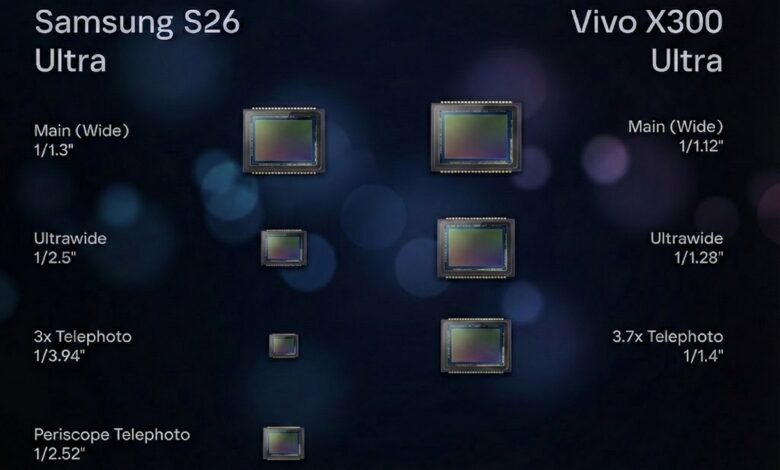
The arrival of the Galaxy S26 Ultra on the market is raising questions among those who have long considered Samsung a leader in flagship smartphones. Despite being the brand’s most powerful model, the new device has already become the subject of debate even before its official launch, mainly due to the limited upgrades to its cameras. As Chinese manufacturers rapidly gain ground by focusing on larger sensors and innovative technologies, the Korean giant risks losing part of its audience.
Mobile technology enthusiasts are pointing out that the gap between Samsung and its Chinese competitors is becoming increasingly visible. While the Korean company once set the standard in the camera phone segment, Vivo and other brands now offer solutions that objectively surpass the S26 Ultra in terms of specifications. It’s not just a numbers game—the actual image quality is often decisive when choosing a new device.
Comparison with competitors
In recent months, numerous details about the Vivo X300 Ultra—a smartphone not yet on sale—have surfaced online, sparking interest among experts. According to MuyComputer, this particular model is set to become the main rival of the Galaxy S26 Ultra. Sensor comparisons reveal that Vivo uses larger modules, directly affecting detail and sensitivity to light. While Samsung relies on software enhancements, Chinese engineers are investing in hardware.
This approach gives Vivo an advantage in low-light conditions and when shooting complex scenes. Buyers who value photo quality are increasingly looking at alternatives from China. For Samsung, this is a worrying sign: if the trend continues, the brand may lose part of its loyal audience, which is used to the unconditional leadership of Korean smartphones.
Focus on artificial intelligence
Samsung openly admits that it plans to compensate for its hardware lag by relying on computational photography and artificial intelligence. The principle is simple: the smartphone takes a series of shots, analyzes them, and merges them into a single picture using algorithms to improve sharpness and color reproduction. Apple has been using this approach for quite some time, and now the Koreans are following the same path.
However, this method has its limits. No matter how hard the engineers try, software solutions cannot fully replace the physical capabilities of a large sensor. As a result, despite all efforts, the Galaxy S26 Ultra cannot compete with the Vivo X300 Ultra in several key areas. This becomes especially clear when shooting in challenging conditions, where the quality of the original material plays a decisive role.
Accessory limitations
Another point that has left Samsung fans puzzled is the decision to remove Bluetooth from the S Pen. The new stylus for the S26 Ultra no longer supports wireless features, limiting its versatility. For many users, this comes as an unpleasant surprise, since the S Pen previously allowed remote control of the camera and presentations. Now, the accessory’s functionality is notably reduced, making the device less attractive to those who use their smartphone not only for photos, but also for work.
This move is explained by the desire to simplify the design and reduce power consumption, but for some users, it feels like a step backwards. Against the backdrop of growing competition from Chinese brands, who are not cutting back on features, such limitations could play against Samsung.
Market reaction
On social media and forums, users have already started comparing the Galaxy S26 Ultra’s camera quality to that of budget models. Some believe the device’s price does not match its capabilities, especially considering that competitors offer more advanced options for the same price. As MuyComputer reports, the situation with early sales only fueled more interest and sparked a wave of discussions among tech enthusiasts.
While Samsung focuses on brand recognition and software enhancements, Chinese manufacturers are rapidly gaining ground. If this trend continues, the flagship smartphone market could undergo significant changes in the coming years. Consumers are becoming more discerning, and a well-known name on the case is no longer enough to guarantee success.
Samsung is a South Korean company that has been considered a leader in mobile technology for decades. The brand’s flagship smartphones have traditionally set industry standards, and the Galaxy Ultra lineup was associated with top-tier performance. However, in recent years, competition from Chinese manufacturers has intensified, forcing Samsung to seek new strategies to maintain its market share. The company is actively implementing artificial intelligence and software solutions to make up for hardware shortcomings, but customer feedback shows that for many, real specifications matter more than marketing promises.