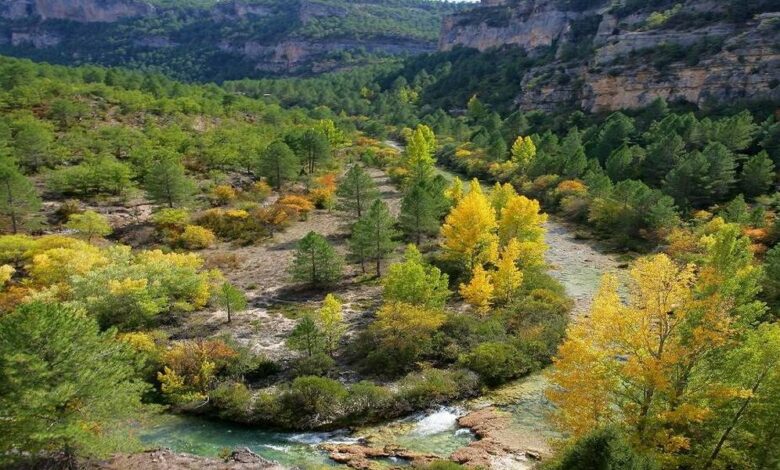
In the very heart of Spain, just a few hours from the bustling capital of Madrid, lies one of the country’s most impressive yet little-known natural enclaves. This unique spot recently celebrated its 25th anniversary. The festivities, which included numerous events and organized routes, brought together locals, tourists, and nature enthusiasts to mark a quarter-century of dedicated efforts to preserve biodiversity and promote sustainable rural development.
We are talking about the Alto Tajo Natural Park, which spans over 100,000 hectares and covers the territory of 44 municipalities in the provinces of Guadalajara and Cuenca. Since its creation in 1999, this protected area has become a model of natural resource management and a true engine of growth for one of Spain’s least populated regions, playing an active role in combating depopulation.
The park’s central artery is the Río Tajo, which for millennia has carved its way through limestone rocks, shaping a breathtaking landscape. Dizzying canyons and gorges, some plunging to depths of 200 meters, make up one of the most extensive and valuable geological systems in all of Europe. These monumental cliffs are home to countless species, including rare birds of prey whose numbers have noticeably increased in recent decades.
During the anniversary events, the park’s management particularly emphasized the invaluable contribution of local communities. According to director Ángel Vela, it is their active involvement that has made it possible to achieve a fine balance between the need for nature conservation and the sustainable use of its resources. He noted that ecosystem indicators show significant improvement compared to previous decades, as evidenced by the increasing populations of hawks and other endemic species. This synergy between tourism, environmental protection, and rural development has made Alto Tajo a national benchmark for ecotourism.
In addition to its natural treasures, the park has become a platform for innovative collaborative projects. Among them are the restoration of old kaolin mines in Peñalén and the establishment of a joint parking management system in the most visited tourist areas, such as the Tajo Canyon. These initiatives not only create jobs for the local population, but also help regulate visitor flows, ensuring that the site’s growing popularity does not disturb its fragile ecological balance.
For visitor convenience, the area offers an extensive network of information centers. Guests can stop by the center in Corduente, the Livestock Museum in Checa, as well as offices in Orea, Peralejos de las Truchas, Ocentejo, and the main “Río Tajo” center in Zaorejas. All this solidifies Alto Tajo’s reputation as a must-visit destination for those seeking to connect with unspoiled wilderness. Celebrating its 25th anniversary, the park reaffirms its commitment to conservation, civic engagement, and sustainable development. Its dramatic landscapes, unique biodiversity, and the efforts of those who protect it make this place a true treasure, inviting visitors to discover the wildest side of Castilla-La Mancha.