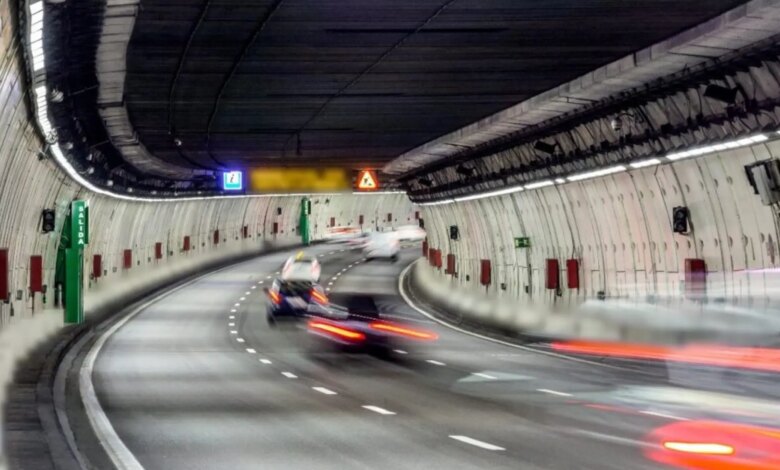
For a long time, driving through the underground sections of the M-30 in Madrid has been challenging for motorists. The problem was that satellite navigation signals disappeared underground, causing routing apps to suggest nonexistent exits and turns. As a result, many drivers would get lost in the complex road network, where it’s already easy to get confused.
The situation has changed with the introduction of a new technological system. Now, 1,600 Bluetooth beacons have been installed in the M-30 tunnels, providing a stable signal for mobile devices even in the absence of GPS. These devices allow apps to accurately determine the vehicle’s location and update the route in real time.
By the end of the year, the number of beacons is expected to grow by another 1,100 to cover all underground sections, including future tunnels on the A-5. The installation was made possible through a partnership between city authorities and Google and Waze. The beacons run on low-energy batteries and require minimal maintenance.
To ensure the system works properly, users need to activate Bluetooth on their smartphones. In Google Maps, the ‘tunnel beacons’ feature must be enabled manually in settings, while in Waze the connection is automatic. The beacons do not collect personal data or track user movement—they only transmit a signal that helps apps pinpoint the exact location of the car.
An additional advantage is the integration with the community of drivers using Waze and Google Maps. This enables the system to receive up-to-date information on traffic incidents, congestion, and roadworks, enhancing safety and improving tunnel throughput. According to the municipality, around 500,000 vehicles pass through these sections daily.
The implementation of the project required an investment of 140,000 euros. Madrid has become the European leader in the number of such devices and ranks second globally after Tokyo. With the launch of the Bluetooth beacon network, the likelihood of getting lost in the complex structure of the M-30 tunnels has virtually disappeared.