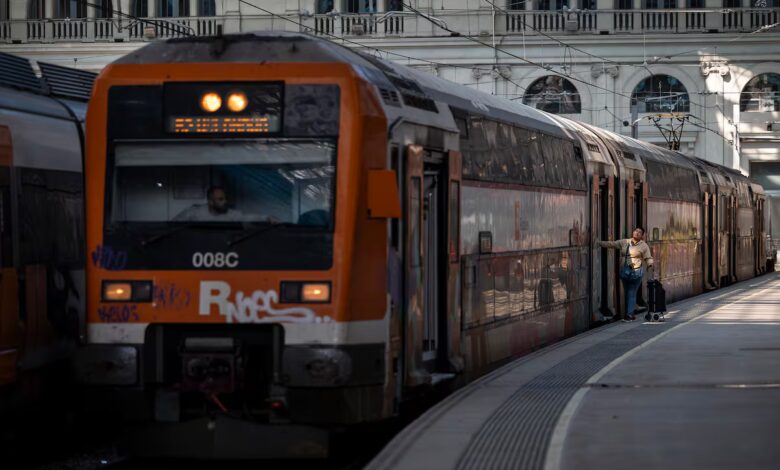
Sharp changes in the management of Catalonia’s railway network may impact the interests of thousands of residents. The decision to transfer Renfe’s management authority to Òscar Playà, who already leads Rodalies de Catalunya, took many observers by surprise. This move promises to shift the balance of power between regional and national bodies and could affect the quality of passenger services.
In recent weeks, the situation on Catalonia’s railways has drawn attention not only from experts but also from the general public. Following a series of breakdowns and chaos in Rodalies operations, the question of who should be responsible for management became a heated topic of debate. Against this backdrop, the decision to appoint Playà to his new post was made—a move that, according to some politicians, should put an end to disagreements between the Generalitat and Renfe.
Staff changes
On Monday, the position of Director of Operations at Rodalies became vacant after the dismissal of Josep Enric Garcia Alemany. His departure was a direct consequence of the recent transport failures that sparked a wave of criticism against management. At the same time, Adif’s Head of Operations, Raúl Míguez, was also relieved of his duties, further heightening the sense of instability within the railway network’s leadership.
Against this backdrop, Òscar Playà’s appointment appears to be an attempt to stabilize the situation and restore passenger confidence. However, not all experts are convinced that merging two key roles under one person will deliver the desired results. Some fear this may create new risks and increase pressure on the leader, who will be required to solve several complex issues simultaneously.
Political undertones
The decision to appoint Playà came shortly after ERC party representative Ester Capella publicly demanded that management of the railways be transferred more quickly to the Generalitat. This move was seen as a signal that regional authorities intend to gain greater control over Catalonia’s transportation system. At the same time, representatives of central structures emphasize that the decision was agreed upon by all sides and is aimed at increasing the efficiency of the network.
Political circles continue to debate whether the new management scheme will truly improve the situation or become a source of new conflict between Madrid and Barcelona. Some analysts note that such personnel changes could set a precedent for other regions of Spain, where the issue of decentralizing transport management is also under discussion.
Impact on passengers
For regular users of Catalonia’s railways, these changes could mean both improved service and new inconveniences. On the one hand, enhanced coordination between Rodalies and Renfe is expected to reduce disruptions and increase timetable reliability. On the other, the transition period may involve additional challenges linked to restructuring management processes and staff adapting to new requirements.
Passengers have already expressed concerns about possible delays and changes to their usual train schedules. Social networks are abuzz with rumors about upcoming reforms and potential job cuts, although officials have yet to make specific statements on the matter. Meanwhile, union representatives are demanding transparency and job security guarantees for railway company employees.
The future of the railways
The appointment of Òscar Playà to a key role in managing Renfe and Rodalies could mark the start of a new era for Catalonia’s railway system. Regional authorities expect that unified management will enable quicker responses to emerging issues and more efficient use of resources. However, the success of this reform will largely depend on how quickly collaboration between various entities can be established and internal disagreements overcome.
In the coming weeks, attention to the situation on Catalonia’s railways will remain high. Passengers, staff, and politicians will closely monitor the first results of the new leadership’s work. Expectations are high and the risks are tangible. Whether this reform will bring real improvement remains an open question.