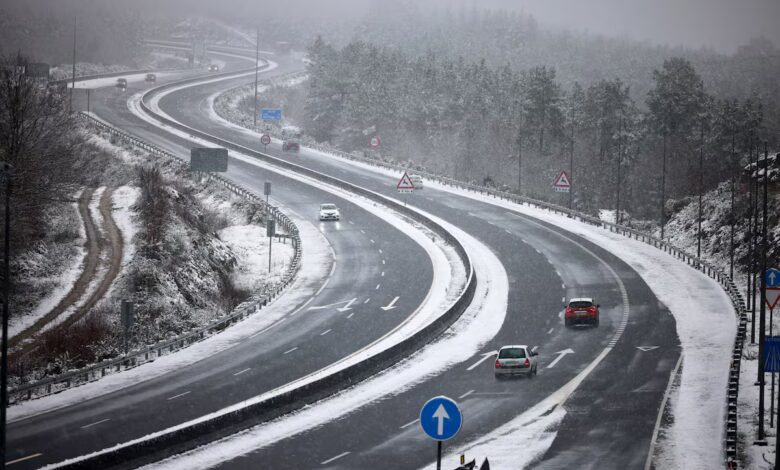
Severe weather has once again gripped northwest Spain. Just as the residents of Galicia were recovering from the aftermath of Cyclone Ingrid, the region found itself facing a new storm. The system, named Joseph, brought heavy rains, gale-force winds, and a sharp drop in temperatures, forcing local authorities to implement emergency measures. From early Monday morning, several municipalities declared a red alert, and classes in almost twenty localities were cancelled.
The inland areas of the Pontevedra province were at the heart of the storm: up to 120 liters of rainfall per square meter are expected in 12 hours, and up to 150 liters in 24 hours. Authorities have not only suspended classes but also banned all mass outdoor events. In neighboring Ourense, the situation is no less tense: more than 60 municipalities have been ordered to cancel all outdoor activities, and rainfall could reach 80 liters in 12 hours. An orange alert is in effect across the region.
The aftermath of Ingrid
While Galicia’s residents assess the damage left by the previous storm, a new wave of bad weather is already setting the rules. Over the weekend, emergency services recorded more than 600 incidents linked to Cyclone Ingrid. Hundreds of roads across Spain were blocked by heavy snowfall, and nearly a thousand truck drivers were forced to spend the night in their vehicles, waiting for the roads to be cleared.
In several towns in Ourense, such as Viana do Bolo, Montederramo, Bande, and Calvos de Randín, residents found themselves literally cut off from the outside world. In the municipality of Chandrecas de Queixa, all movement was completely paralyzed on Sunday morning. Authorities note that the region has not seen weather disasters of this scale in many years.
Transport paralysis
Rail service was also threatened. The national carrier Renfe announced a suspension of train operations between Ourense and Santiago, as well as between Ourense and the Vigo Guixar station. On certain routes—for example, Ourense-Lalín-Santiago—passengers were offered alternative bus transport. However, a number of routes, including suburban lines Ferrol-Ortigueira and Cudillero-Ferrol, were completely halted with no replacement.
Long-distance trains from Galicia to Barcelona now have to take an alternate route and depart from a different station. International links between Vigo and Portuguese Viana do Castelo are now only available by road. As a result, thousands of passengers are left in uncertainty, and schedules across the northern part of the country have been disrupted.
A broad geography of alarm
The natural disaster was not limited to Galicia. Orange and yellow danger levels have been declared along the entire northern coast of Spain — from Cantabria to the Basque Country. Interior areas of Cáceres, Ávila, and even specific municipalities in Cádiz are also at risk due to heavy rainfall. In the Pyrenees of Aragón, snowfalls have forced the introduction of additional traffic restrictions.
Meteorologists warn that weather anomalies could affect not only the north but also the southern and eastern regions of the country. Authorities advise residents to exercise extreme caution, avoid travel, and closely monitor forecast updates. On social media, people are actively discussing how rapidly the climate is changing and how prepared local services are for such challenges.
Authorities’ response
On Sunday, Galicia’s regional government head Alfonso Rueda personally visited the regional emergency services center to assess the situation and coordinate rescue operations. Officials say the priority is citizens’ safety and minimizing damage to infrastructure. In the coming days, increased road controls and additional safety measures are expected in the hardest-hit areas.
While some municipalities are just beginning to restore electricity and communications, others are preparing for new storms. Authorities do not rule out that restrictions may be extended and the list of closed schools and roads could grow. Residents of the region anxiously follow the developments, fearing new surprises from the unpredictable weather.