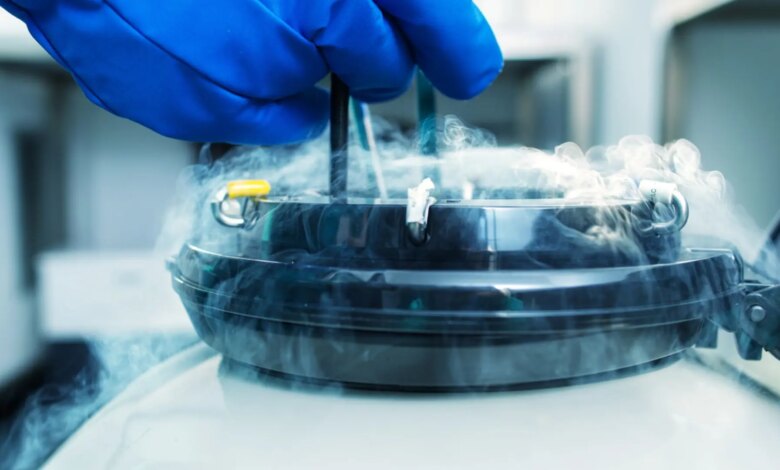
Spain is actively exploring the possibilities of introducing liquid nitrogen in the transport sector. This chemical element, represented as ‘N’ in the periodic table, is becoming increasingly prominent in discussions on the future of clean transportation.
Unlike traditional fuels and heavy batteries, this technology relies on the energy released when nitrogen transitions from a liquid to a gaseous state. This process is emission-free, making it attractive for sustainable transport development.
Nitrogen makes up the bulk of the Earth’s atmosphere—about 78%. When cooled to minus 196 degrees Celsius, it turns into a liquid capable of storing significant energy. When it returns to its gaseous state, its volume increases hundreds of times, creating the pressure needed to power an engine.
Compared to hydrogen, nitrogen stands out for its higher safety and ease of storage. It can be produced using renewable energy sources. However, storing liquid nitrogen requires special cryogenic tanks, which raises implementation costs. Despite this, the technology’s advantages make it a promising avenue for zero-emission transport.
Compared to electric vehicles, the liquid nitrogen system does not require heavy batteries, reducing the overall weight of the vehicle. Refueling takes minimal time and is not associated with environmental pollution. In addition, nitrogen is less flammable than other types of fuel.
Thus, liquid nitrogen could become not only an alternative to petroleum products, but also a competitor to modern electric and hydrogen solutions. In Spain, the analysis of the efficiency and economic feasibility of implementing such technologies continues.
For comparison, hydrogen engines can operate using fuel cells or by the principle of direct combustion. In the first case, hydrogen reacts with oxygen to generate electricity, emitting only water vapor. In the second, a modified internal combustion engine is used, where nitrogen oxide emissions are minimal and no carbon dioxide is produced.
Electric vehicles are highly efficient and benefit from a developed charging infrastructure as well as low operating costs. Hydrogen cars offer faster refueling times and longer range, but their production remains expensive and energy-intensive.