In recent years, Spain has implemented an eco-label system developed by the Directorate-General for Traffic (DGT). This system classifies vehicles based on their environmental impact. Such a system is necessary to regulate access to certain urban areas and to introduce restrictions for vehicles.
There are four main categories: “Cero,” “ECO,” “C,” and “B.” They differ in terms of environmental friendliness, from the cleanest to the least efficient. In addition, some vehicles do not qualify for any of these labels. These include petrol cars manufactured before 2001 and diesel vehicles registered before 2006.
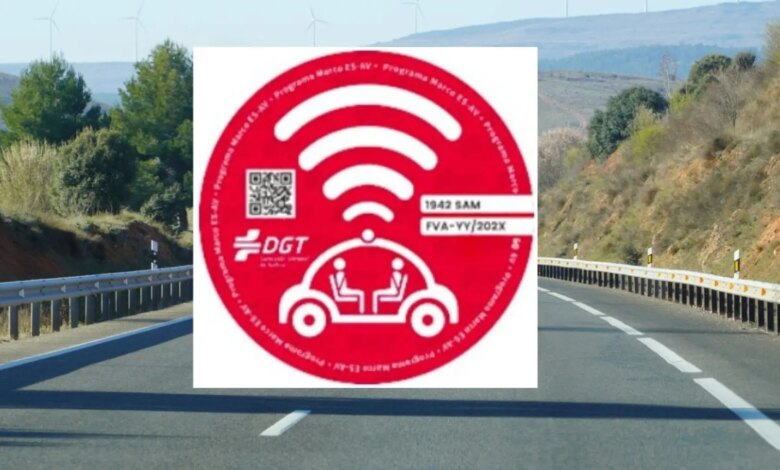
Recently, a new label appeared on the country’s roads — the red sticker. It has raised questions among many drivers because it is not related to the vehicle’s environmental characteristics. The red mark is intended for autonomous vehicles participating in a special testing program organized by the DGT.
This program stipulates that only certain driverless vehicles, which have received authorization, are allowed to use the red sticker and drive on public roads. Participation requires passing several stages of safety inspection and certification.
The admission system includes three options. The first is an independent technical review conducted by an external organization. The second is the recognition of a permit issued in any country of the European Economic Area. The third is a special procedure that takes into account test results obtained outside Europe.
Testing of autonomous vehicles is divided into three stages. In the first stage, tests are conducted in controlled conditions when the technology is still under development or just starting to be deployed. Particular attention is paid here to safety checks and refining control systems.
The second stage involves larger-scale tests in conditions close to real-world environments. At this stage, autonomous vehicles are advanced enough to operate in wider areas and for longer periods. Typically, these are vehicles that have not yet received official certification but are preparing for it.
The third stage is pre-commercial operation. This phase tests systems that are almost ready for mass deployment. The vehicles have either passed previous tests or have partial certification. At this stage, a final functionality check is carried out on public roads before obtaining final authorization for use.
Thus, the new red sticker has become a distinctive mark for autonomous vehicles participating in the DGT’s experimental program. It is not related to environmental standards but serves to identify vehicles undergoing testing on Spanish roads.