The sudden disappearance of vibrations in Alonso’s car on the eve of the race in Japan was an unexpected twist for Aston Martin. The team’s engineers struggled to understand why the unpleasant oscillations that had troubled the driver over several stages suddenly subsided, only to return at the most crucial moment. The issue reappeared during qualifying, but in the race, the intensity of the vibrations lessened, even though no changes had been made to the car’s setup. This puzzled both the specialists and Alonso himself, as such phenomena directly affect a driver’s physical condition and performance.
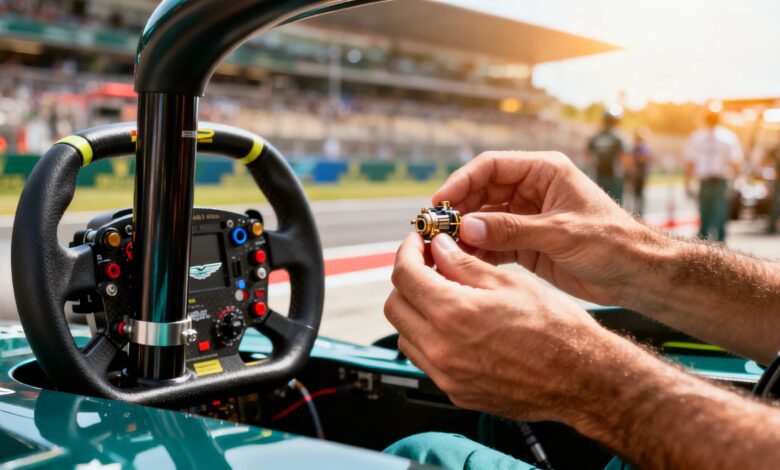
According to RUSSPAIN.COM, the key to the mystery lay in the steering column. Aston Martin had been experimenting with a new component designed to dampen vibrations transmitted from the engine through the chassis to the driver’s hands and back. Despite a positive effect during practice sessions, the team decided not to use this part in qualifying and the race due to concerns about reliability. Operations director Mike Krack confirmed that corrective measures were trialed, but the final decision prioritized stability and safety.
Technical details
The issue of vibrations in modern Formula 1 cars goes beyond comfort. Strong oscillations can lead to fatigue, reduced concentration, and even mistakes on the track. In Alonso’s case, the vibrations could be felt not only in his hands but throughout his entire body, which is especially dangerous over long distances. Aston Martin had to find a balance between innovation and risk: introducing new components always comes with potential failures, particularly within strict regulations and limited testing time.
Interestingly, despite abandoning the experimental part for the decisive sessions, vibrations became less noticeable during the race. This raised new questions among engineers and analysts: perhaps weather conditions, track characteristics, or even subtle changes in the car’s setup after qualifying played a role in reducing the impact. In any case, the situation showed how crucial details are in modern Formula 1, and how a single small modification can influence the outcome of a race weekend.
Risks and solutions
Aston Martin openly admits that implementing new technical solutions requires caution. Any part that has not passed the full testing cycle can cause a retirement or accident. Therefore, the team decided not to take unnecessary risks, especially given the tight competition in the championship. Still, the experience with the steering column provided engineers with valuable data to be used for preparing the next stages. By the Miami Grand Prix, an updated version of the component designed to reduce vibrations without compromising reliability is expected to be introduced.
The situation with Aston Martin serves as a reminder that even the smallest changes can lead to unexpected outcomes. In motorsport history, there have been cases when last-minute technical innovations shifted the balance of power on the track. For example, the recent transition by European car manufacturers to new technologies caused a stir in the market, much like when a well-known coach chose an electric car—more on this can be found in the feature about changes in the automotive industry using the example of Guardiola switching to a Chinese electric car.
Looking ahead
For Alonso and Aston Martin, this experience prompted a reevaluation of their approach to car preparation. The team now pays closer attention to small details that previously might have seemed insignificant. In a fiercely competitive racing environment, these nuances can provide a crucial advantage. New challenges await Aston Martin, and their success in Japan may become a springboard for further improvements.
Fernando Alonso is one of the most experienced and decorated Formula 1 drivers, renowned for his ability to adapt to challenging conditions and collaborate with engineers to improve performance. His career has been marked not only by victories but also by a constant pursuit of new solutions, making him a valuable asset to any team. Aston Martin, for its part, continues to invest in the car’s development and the introduction of innovations, aiming to reclaim its place among the championship leaders. The cooperation between the driver and engineers is becoming a key factor for success, especially amid ongoing changes to technical regulations and increasing competition.