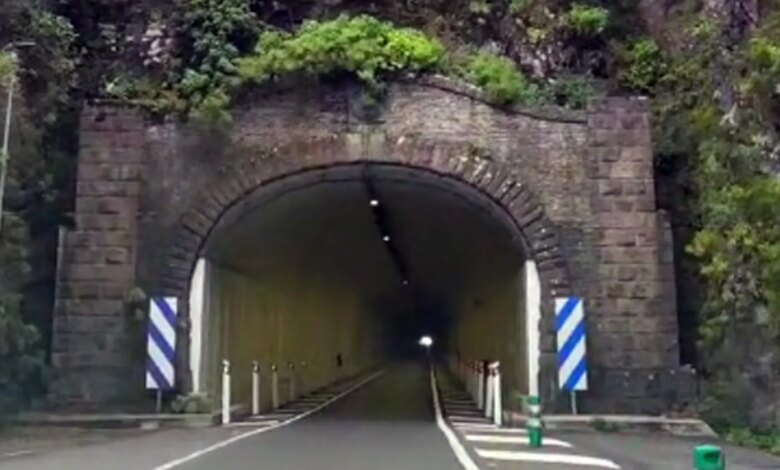
There are currently more than four hundred road tunnels operating across Spain, located throughout the country. One of the first such structures is the tunnel at the Lizarraga pass (Lizarraga), built in the mid-19th century to connect two regions of Navarra — Tierra Estella and La Barranca.
The history of tunnels for vehicle traffic dates back to ancient times. For example, near Naples, in the Pansilippo area (Pansilippo), there is a preserved Roman road that was built as early as 36 BC. It stretches for 1.5 kilometers, making it one of the oldest such structures in Europe.
When it comes to Spain’s longest tunnels, the Somport (Somport), which opened in 2003, is the leader in terms of length. Its total length is 8.6 kilometers, but only five kilometers are located on Spanish territory, with the rest in France.
Among the country’s unusual tunnels is the one on the island of La Palma, located along the LP-3 highway. Locals and authorities call it the “Tunnel of Time.” The name comes from the sharp change in weather conditions when driving through the tunnel: motorists may enter an area of fog and rain and exit into clear, sunny skies.
This effect is explained by a phenomenon known as the Föhn effect. According to the National Geographic Institute, it occurs when warm, moist air rises up the mountain slope, cools, forms clouds and precipitation, and then, descending on the opposite side, warms up and becomes dry. As a result, one side of the tunnel experiences cool, humid weather, while the other is dry and warm.
Such climate contrasts occur in mountainous regions, where the terrain leads to abrupt weather changes. The La Cumbre tunnel (La Cumbre) on La Palma gained fame after a video went viral on social media, vividly demonstrating this striking transition between two climate zones.
Spanish tunnels not only provide transport links, but also attract tourists and researchers due to their unique characteristics and historical significance.