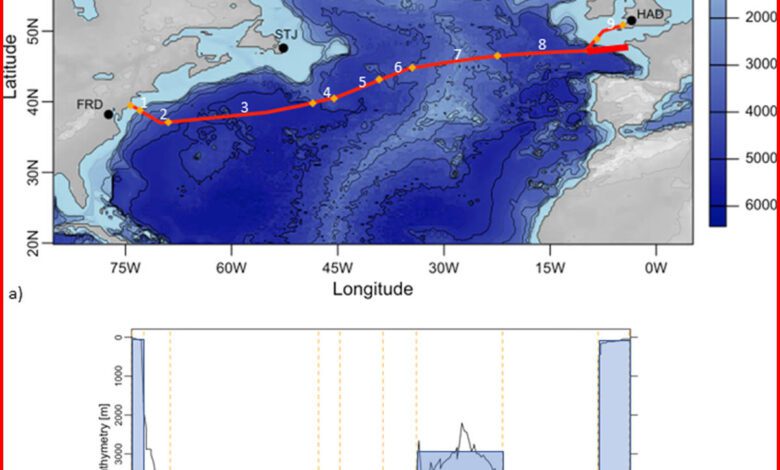
When a cable that has connected two continents for decades disappears from the ocean floor, it’s more than just a technical operation. This is an event that affects the entire structure of global communications. TAT-8, the first fiber-optic cable between Europe and the USA, became a symbol of a new era, when information began to move at the speed of light beneath the waves. Its dismantling is not just the replacement of old equipment, but a reminder that behind our familiar digital reality there are real people, metal, and glass.
In 1988, when TAT-8 came online, no one could have imagined how quickly the world would change. Before that, undersea communication lines were copper-based, which limited their capacity. Fiber optics made it possible to transmit enormous amounts of data, and it was this cable that first linked two continents with pulses of light. Over its years of service, it witnessed the fall of the Berlin Wall, the birth of the internet and social networks, and the explosive growth of digital technologies.
A technological leap
The arrival of TAT-8 was a true breakthrough. Until then, communications between continents were slow and unreliable. The fiber-optic line not only sped up data transmission but also made it stable. In just a year and a half after launch, the cable was already running at full capacity — demand for communication was growing faster than engineers had expected. This spurred the construction of new lines, and soon dozens, then hundreds, of similar cables appeared beneath the ocean.
Today, there are about 600 active undersea lines carrying nearly all intercontinental traffic. Contrary to popular belief that communication relies on satellites, it is actually the submarine cables that form the backbone of the internet. Satellites serve remote areas, but in terms of volume and reliability, they cannot compete with fiber optics. Every day, millions of people use these lines without ever thinking about what lies deep beneath the ocean.
The challenges of dismantling
Removing an old cable is no easy task. This requires special ships, precise coordinates, and experienced crews. Workers literally fish the cable from the depths using hooks and winches. Each signal amplifier weighs hundreds of kilograms and requires careful handling. The process moves slowly, step by step, and leaves no room for automation. It’s hard work, where every detail counts.
Once brought to the surface, the cable doesn’t end up in a museum. It’s dismantled, with copper, steel, and plastic separated for recycling and returned to industry. As demand for copper rises and reserves are limited, reuse becomes especially important. Optical fiber is almost impossible to recycle, but the rest of the raw materials get a new lease on life.
Significance for the future
The retirement of TAT-8 does not mark the end of an era, as the network continues to grow and evolve. However, this event highlights the massive physical infrastructure behind the virtual world. Every cable is the result of the work of engineers, sailors, and laborers who ensure stable connections between countries. Without these people and their efforts, there would be no fast calls, instant messages, or streaming video.
As MuyComputer reports, the dismantling of TAT-8 dispels the myth of the digital network’s invisibility. The operation to remove the cable demands precision and coordination, with each stage involving risks and challenges. This serves as a reminder that the internet is not an abstraction, but the result of the work of thousands of specialists who remain behind the scenes.
The TAT-8 cable became the first fiber-optic bridge between Europe and the United States. Its launch in 1988 opened a new chapter in the history of communications, enabling data to be transmitted at unprecedented speeds. Over the years in service, it spanned thousands of kilometers along the Atlantic seabed, providing connections at critical moments in world history. Today, new lines have taken its place, but the significance of TAT-8 in the development of the internet cannot be overstated. This project demonstrated that even the most complex technical challenges can be overcome when there is a goal and a desire to move forward.