Volvo is changing the game for hybrid SUVs: the XC70, already on sale in China, can travel over 1,200 kilometers without refueling. This is achieved through a combination of a large battery and a gasoline engine, allowing drivers not to depend on charging station infrastructure. For European drivers, this offers a real alternative to both pure electric vehicles and traditional crossovers, especially given increasing restrictions and emission requirements.
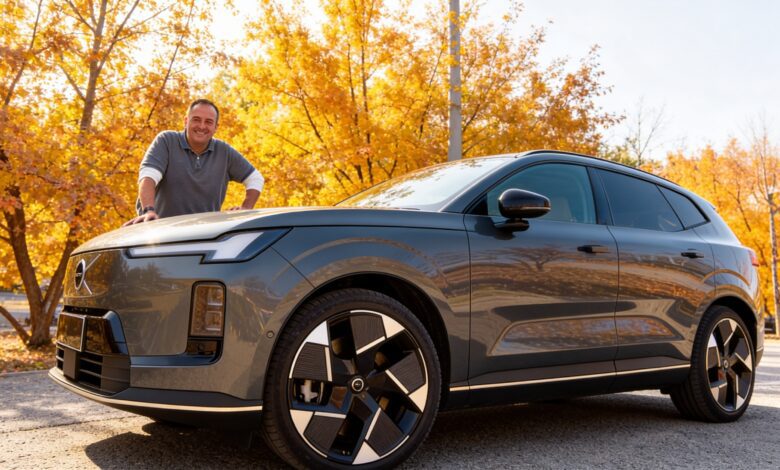
Unlike previous versions, the new XC70 no longer resembles a classic wagon with plastic cladding. Now it is a modern SUV with frameless windows and distinctive lighting inspired by Scandinavian design. In China, the model is already making a mark, and Volvo expects it will also find its audience in Europe among those not ready to give up gasoline entirely but wanting maximum autonomy. According to RUSSPAIN.COM, this approach may attract buyers who do not yet trust electric cars due to limited range or long charging times.
Technology and autonomy
The XC70 stands out not only for its appearance, but also for its technical features. Its electric driving range reaches 212 kilometers—twice as much as most competitors. The battery is available in two capacities: 21.2 and 39.6 kWh, allowing buyers to choose the optimal balance between price and range. Once the battery is depleted, a 1.5-liter gasoline engine with 156 hp kicks in, providing another 1,000 kilometers of travel without stopping. Charging to 80% takes just 23 minutes, which sets the XC70 apart from many other hybrids.
While such solutions are already standard in China, they remain rare in Europe. Volvo is targeting those not ready to accept the limitations of pure electric vehicles, but who still want to cut fuel costs and emissions. Even if the XC70’s price in Europe is higher than the €51,000 in China, its unique combination of features may justify the investment. Crucially, the XC70 doesn’t require frequent charging stops, making it suitable for long journeys and family travel.
Performance and comfort
On the roads of Beijing, the XC70 proved itself to be a well-balanced and confident vehicle. The suspension is tuned for softness, typical for the Chinese market, but European drivers might find the steering and shock absorbers need refinement for more precise control. The internal combustion engine is noticeable, and its sound doesn’t always match the car’s premium image. Still, these issues are easy to address when adapting the model for Europe.
The base front-wheel drive version produces 318 hp and accelerates from 0 to 100 km/h in 8 seconds. The top modification features an additional electric motor on the rear axle, providing all-wheel drive, 462 hp, and a 0–100 km/h time of 5.3 seconds. This result rivals sports models rather than typical family SUVs, which could be a strong point for buyers who value dynamic performance.
Interior and space
Inside, the XC70 maintains Volvo’s signature Scandinavian style: minimalism, high-quality materials, and thoughtful ergonomics. Special attention is paid to space—the body length of 4.82 meters and a wheelbase of 2.86 meters ensure comfort even for rear passengers. The 408-liter trunk makes it possible to do without a front luggage compartment (frunk) in favor of increased range, a rare feature among hybrid SUVs.
The car is equipped with advanced driver assistance systems that help prevent dangerous situations and make journeys more relaxing. In this regard, the XC70 matches its German competitors, and in terms of autonomy and convenience may even surpass them. This approach is especially relevant amid ongoing debates about European automakers’ reliance on Chinese technologies, which was recently discussed in the article on the impact of new EU regulations on the market.
Volvo: a look to the future
The XC70 is more than just another model in the Volvo lineup. It represents the Swedish brand’s attempt to offer a compromise for those not yet ready to switch entirely to electric vehicles, yet seeking to reduce their dependence on gasoline. This approach could set a new standard for the European market, where environmental and efficiency requirements are becoming increasingly stringent. Volvo continues to develop its own technologies, avoiding imitation of competitors and offering unique solutions tailored to real drivers’ needs.
Volvo is one of Europe’s oldest automakers, renowned for its focus on safety and innovation. The company actively invests in the development of hybrid and electric technologies in its bid to maintain a leading position in the premium car market. The XC70 has become a symbol of a new era, combining long range, comfort, and advanced features—making it an appealing choice for those seeking a versatile, reliable car for everyday use. The Swedish brand continues to prove that it can surprise even the most demanding customers.