Housing accounts for 344 of the more than 800 measures Llorente y Cuenca examined across six sectors. The analysis found that 45% of campaign proposals had not been defended or put to a vote during the last legislature. The issue is central to the 29 November election campaign, amid a continuing crisis of housing supply and affordability.
On housing, most parties back expanding the public stock. They differ on rents and how to increase supply: PSOE and Frente Amplio propose annual housing spending equivalent to 1% of GDP, estimated at about €17 billion, and support rent intervention in stressed areas. The PP has pledged to build 1 million homes over four years and, alongside Vox, emphasises tax relief and measures to boost private supply. The PP proposes repealing Spain’s 2023 Housing Law, removing stressed-market designations and abolishing the rent-reference index. The PP also backs anti-squatting rules that would allow evictions within a maximum of 48 hours; Vox and Junts support the rules as well. The PP proposal is subject to a court order. Separately, Royal Decree-Law 29/2026, adopted by the government on 6 October and validated by Congress on 12 November by 35 votes to 34, suspends certain evictions involving vulnerable households without alternative accommodation until 31 December 2030.
Security and defence generated 215 measures. Immigration and border control dominated the debate, while parties broadly agreed on recognising the Policía Nacional and Guardia Civil as professions exposed to risk and aligning their retirement conditions.
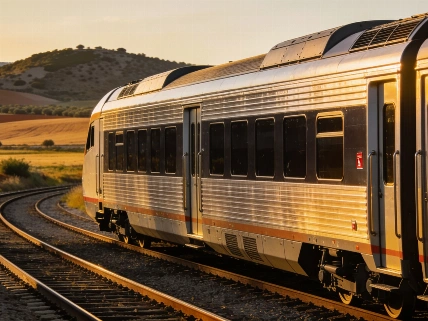
Transport and infrastructure drew 183 proposals, a rise after the rail accident at Urda (Toledo). On 28 October, a Renfe high-speed train and an Iryo service collided near Urda, killing 69 people and injuring more than 200. Parties agree on auditing the rail network and prioritising maintenance in the budget; Frente Amplio and Podemos also call for the sector to be renationalised. The government approved Royal Decree-Law 34/2026 on 10 November to strengthen railway safety and improve social protection for railway-sector staff. On 19 November, the investigating magistrate authorised reconstruction of the damaged Madrid–Seville high-speed track under judicial supervision of Adif; the line’s reopening timetable remained uncertain. A railway-sector agreement also committed Renfe to correcting technical issues in train series 106, 452 and 453 and included €110 million of investment between 2027 and 2029 to modernise air-conditioning on trains operating public-service-obligation routes. A separate Canary Islands road strategy aimed to cut electricity use across assessed infrastructure by 52%.
Energy accounts for 59 measures. Proposals for tax relief find broad support, while the PP and Vox call for nuclear power stations to remain open for longer.
Finance has the fewest proposals, with 17. The PP and Frente Amplio agree on maintaining in-person services for older customers and reactivating the independent authority for the defence of financial clients.