Urda rail tragedy exposes how people judge risk
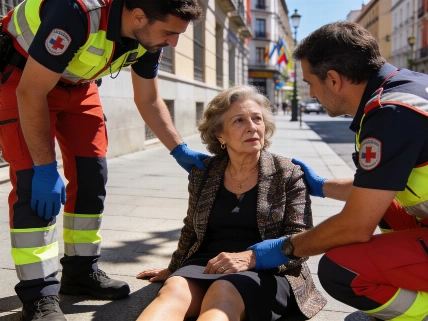
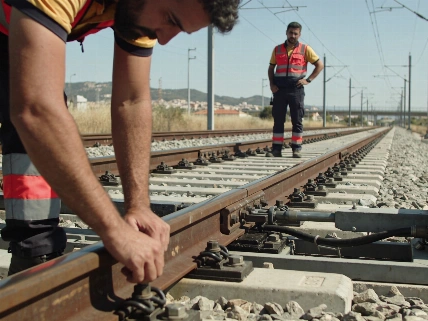
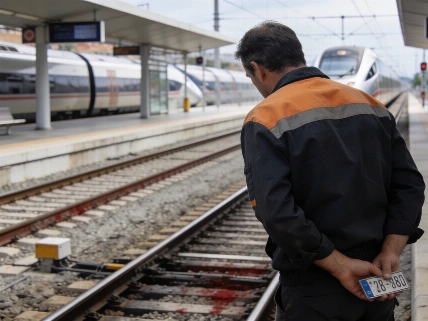
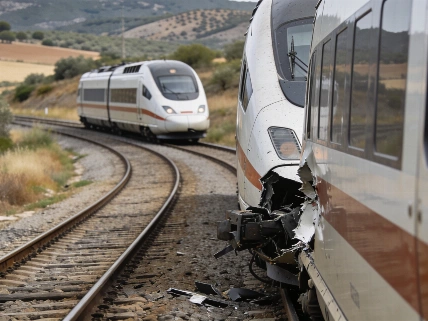
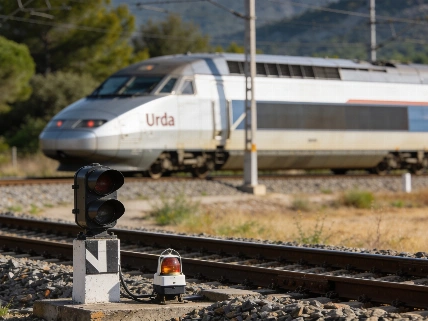
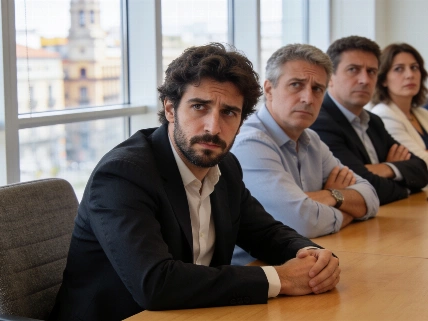
The Urda train tragedy has brought questions about risk perception and railway safety into focus. Rescue teams supported survivors physically and psychologically as the search for explanations began.
The Urda train tragedy has brought questions about risk perception and railway safety into focus. Rescue teams supported survivors physically and psychologically as the search for explanations began.
The accidents at Adamuz and Urda have renewed scrutiny of Spain’s rail governance. A comparison with Germany and Japan focuses on technical credentials in senior posts and staff shortages in control centres.
The film presents Rafael Rodríguez Rapún as a prisoner executed by Francoist forces. Historian Pedro Corral says he was wounded in an air raid in Santander and died in hospital on 18 August 1937.
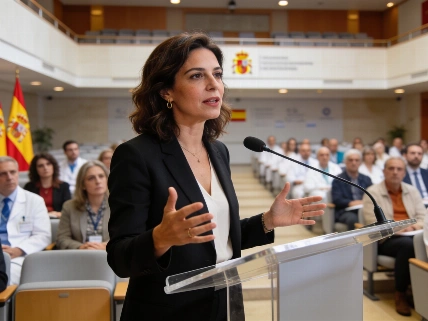
Waiting times for planned treatment have lengthened over roughly two decades, while access to specialist mental health care remains unequal. A review of Spain's health system links these gaps to funding and wider social conditions.
Political scientist Manuel Mostaza says polarisation and cultural differences help explain why Spanish officials resist resigning after disasters. He argues that political responsibility can be demanded even when no crime is established.
After the Urda train disaster killed 69 people the PP is shifting its campaign towards competence and government responsibility. Feijóo wants the 29 November election to become a verdict on the PSOE government while the party watches for Vox gains.
Enric Juliana argues that the rail disasters have damaged confidence in Spain's high-speed network and put Óscar Puente's political responsibility under scrutiny. A possible year-long Madrid-Barcelona suspension could deepen the crisis ahead of the 29 November election.
Diego González is calling for Transport Minister Óscar Puente to resign after the Adamuz and Urda rail accidents. He alleges 115 high-speed rail deaths in 2026, but the material supplied provides no independent evidence for that tally.
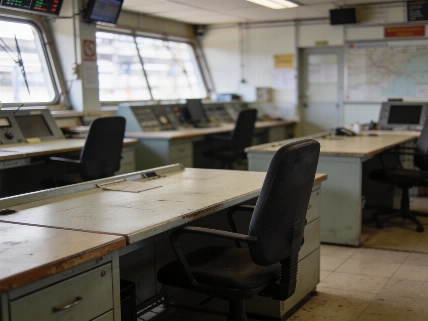
Audio from the Urda crash indicates that Atocha control gave the AVE an LZB4 instruction instead of LZB3. Experts say the reported partial failure called for visual running at no more than 40 km/h while the Iryo occupied the block.
Railway engineer Carlos Sánchez de Roda says the Urda crash may have involved a failure of the ASFA backup system as well as the LZB. He argues trains should not resume after a safety-system fault at an operator’s discretion.
A population-driven redistribution assigns Madrid 38 seats and removes one from Cádiz. Each Madrid MP represents 188,655 residents, compared with just over 45,000 in Soria or Teruel. The population-to-seat gap is 3.6 points.
The Constitutional Court rejected an appeal filed by the Defensor del Pueblo over the suspension of voting rights for 163020 newly naturalised Spaniards. José Antonio Zarzalejos says the move fits a PSOE strategy to challenge election results.
Alejandro Entrambasaguas and María Jamardo discuss disputes surrounding Pedro Sánchez, including the law of grandchildren and developments in the Zapatero case. They also turn to Conde-Pumpido and Sofía Puente.
Spain’s Constitutional Court declined to admit the Ombudsman’s appeal, ruling it premature. The Supreme Court must still decide whether about 163,000 disputed overseas registrations can affect November’s election.
Jesús Cintora challenged Javier Milei's call to remove Spain's socialists by force and said voters decide who governs. The RTVE presenter also cited Santiago Abascal's backing and Isabel Díaz Ayuso's distinction.
Iker Atienza says frustrated voters could turn to the PSOE after progressive parties failed to unite. He casts a vote for Pedro Sánchez as both useful and punitive.
Madrid’s teachers began an indefinite strike with weaker union backing than peers in Catalonia and the Valencian Community. Each full day off costs about €80 to €150 in lost pay.
Allende won the one-million-euro prize for “La hora antes del alba”, a sequel to her 1982 debut, “La casa de los espíritus”. The ceremony took place on the award’s 75th anniversary.
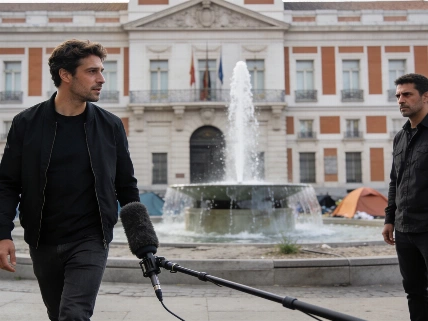
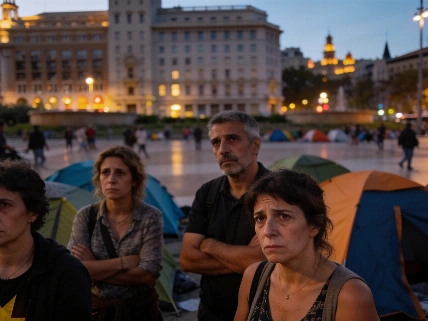
Unai Cano was reporting from a housing-rights camp at Puerta del Sol when a man disrupted the broadcast. Cano said the man had been threatening and insulting the team before shoving him.
The CIS estimates PSOE support at 34% and PP support at 22.2%. Several pollsters say the sample includes too many people recalling a PSOE vote in 2023; the institute says it weights recalled votes in its final estimates.
Felipe VI is due to visit Ceuta and Melilla on October 13 and 14, 2026. Javier Caraballo says Madrid must pair the trip with credible diplomacy as tensions with Morocco persist.
Four parties have proposed Ada Colau to lead Frente Amplio in the 29 November election. They say the invitation to Podemos remains open as they press for a united project.
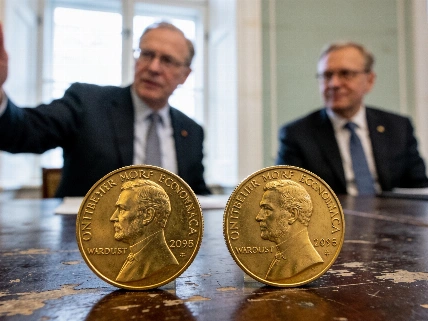
Michael Woodford and Robert E. Hall have received the economics Nobel for research on stabilizing economies. Their models trace how policy decisions shape household and business choices, and how basic-bank communication can move markets.
Antonio Maíllo is pressing Spain’s left-wing parties to agree before 16 October 2026. Podemos still demands open primaries, while the Frente Amplio has no settled candidate.
Sumar is becoming Frente Amplio with Ada Colau as its prospective leader. Podemos is weighing a solo campaign as negotiations approach the 16 October deadline.
Spanish savers have repeatedly entered complex products without understanding the risks. The names have changed from stamps to cryptocurrencies, but the losses have not.
Talks in Madrid produced no Senate deal between PSOE and Frente Amplio. With the 16 October coalition deadline approaching, disputes over candidates and provincial lists are widening.
The launches came four days after South Korea tested a hypersonic missile. Japan said at least two objects likely fell beyond its exclusive economic zone.
The Partido Popular has put Alberto Núñez Feijóo's disputed call for sacrifice at the center of its first campaign video. PSOE responded by tying the slogan to the policies voters may face.
Gabriel Rufián will lead ERC in Barcelona on 29 November after rejecting the Frente Amplio route. His demands have also brought the party closer to cooperation talks with Podemos.
Spain’s constitutional ruling and the temporary lifting of the arrest warrant have cleared Puigdemont’s immediate path home. Junts now faces the risk that his return could expose the limits of his electoral weight.
China’s surge in electric and hybrid vehicle production has pushed Spain’s auto industry to the sidelines. Spanish plants now face hard choices as Chinese brands tighten their grip on global and European markets.
A 29 November election has forced Spain’s Supreme Court to revisit the CERA registrations of new citizens. Keeping the suspension could block voters, while lifting it could expose the result to a legal challenge.
Congress’s rejection of the government’s housing measures, which triggered Spain’s early vote, has pushed housing to the centre of the campaign. Sánchez is stressing protection, while Feijóo is betting on construction and a broader electoral base.
UGT and CCOO will stage a 24-hour strike on 11 November 2026, weeks before Spain votes. The dispute spans housing costs and wages, and now tests the government’s legal and political footing.