Carlos Mazón remained in office for more than a year after the 2024 DANA floods killed 234 people in Valencia. His eventual resignation, announced on 3 November 2025, came after sustained demands from opposition parties and victims’ associations over his handling of the emergency.
Political scientist Manuel Mostaza sees a wider pattern. In an interview with 20minutos, he said polarisation can make politicians see resignation as a political win for their opponents. Cultural differences also shape how the decision is understood in Spain and elsewhere in Europe.
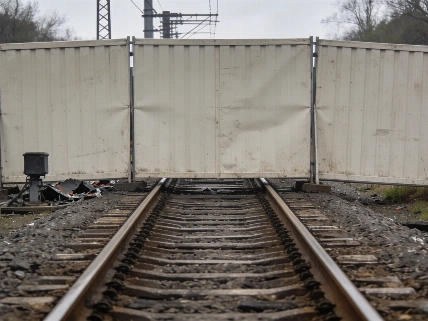
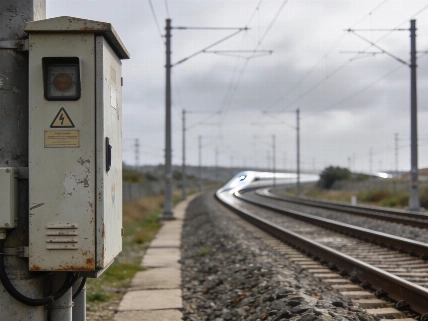
Two rail disasters on Spain’s Madrid–Seville high-speed corridor within nine months have brought the issue back into focus. The Adamuz crash near Córdoba in January 2026 killed 46 people. The Urda collision in Toledo on 28 October, in which a Renfe train struck a stationary Iryo service, killed at least 68 people in Reuters’ initial report; subsequent coverage reported at least 69 deaths and more than 100 injuries. Madrid’s regional government cited a combined toll of 115 fatalities from the two crashes. Transport Minister Óscar Puente said he would not leave the government after the accidents. He said he had offered his post to Prime Minister Pedro Sánchez, who considered resignation unfair. Sánchez has continued to back Puente while acknowledging that two high-speed rail accidents in one year were unacceptable.
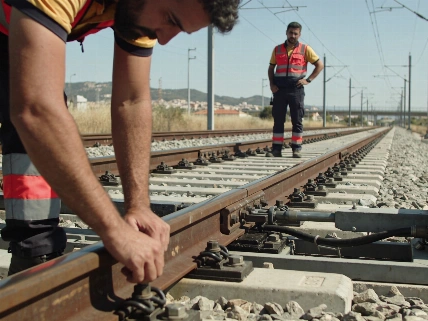
The Adamuz crash drew scrutiny to railway maintenance and safety. Initial reports pointed to a possible crack in the rail, and the investigation remained open. The Urda inquiry examined a different sequence: Puente said a computer communications failure had caused a red signal and automatically stopped traffic, followed by an erroneous decision to restart the Renfe train. CNN reported that the communications and safety-control failure affected a 63-kilometre section of track. Adif president Luis Pedro Marco de la Peña also rejected calls to resign. Puente said he would leave if evidence showed his responsibility had contributed to causing or worsening the damage. Neither man resigned despite demands from the Association of Victims of the Adamuz Derailment. RUSSPAIN’s earlier report on Sánchez’s backing covered the dispute after the Urda crash.
Mostaza argues that political accountability can arise from responsibility for a public service before investigations establish the direct causes of a crash. He considers the case for political responsibility clear, while noting that specific failures in maintenance or the railway system still need to be established. Political consequences do not require proof of a criminal offence. After the Urda collision, the opposition People’s Party and rail unions called for Puente’s resignation, while Madrid’s regional government demanded the immediate departures of both Puente and Sánchez. Sánchez kept the minister in office, and Puente said his duty was to determine exactly what happened and provide clear explanations.
The 28 April 2025 power cut offers another example. It disrupted transport and necessary services across much of Spain and Portugal. Red Eléctrica president Beatriz Corredor rejected calls to resign, while the CNMC opened a sanctioning case against the company over an alleged very serious infringement related to operation of the electricity system. The allegation is not a final finding.
Vice-president and ecological transition minister Sara Aagesen also faced calls to leave office. In May 2026, the Senate approved a motion calling for her immediate dismissal, backed by PP and Vox, with UPN also in support. Mostaza’s core distinction is that a poor political decision may warrant accountability even if prosecutors cannot prove a crime.