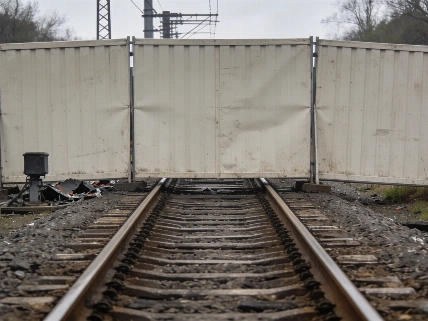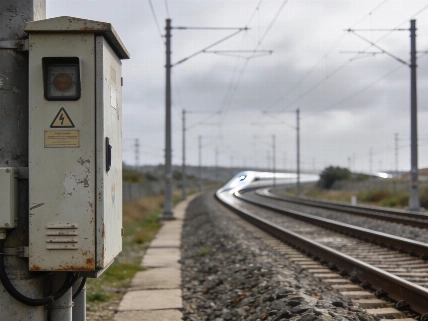
The collision of two trains in Urda killed 69 people and left more than 100 injured, putting responsibility for Spain’s rail network at the centre of the election campaign. The crash occurred on the Madrid-Seville line on 28 October, after the LZB automatic signalling system failed across a 63-kilometre stretch south of Toledo and automatically stopped six trains. A Renfe train then struck a stationary Iryo train at an estimated 160-200 km/h, according to preliminary findings attributed to Spain’s independent accident-investigation authority, AITAT. The PP is seeking to make the disaster a test of the Government’s record at the 29 November general election.
At a meeting with rail experts at the party’s Madrid headquarters, Alberto Núñez Feijóo called the Government responsible for the fatal rail accidents in Adamuz and Toledo. He said 46 people had died in Adamuz because of poor maintenance and at least 69 in Toledo after an obsolete safety system was not renewed. The Urda inquiry is examining the signalling failure and safety mechanisms, along with communications between train drivers and Adif’s control room at Madrid Atocha. Investigators removed the trains’ black boxes on 29 October and transferred them to the Civil Guard for examination; a judge opened a separate investigation. Feijóo’s claims about responsibility are accusations, while the technical and judicial investigations continue. The LZB system was installed in 1992, and professor Salvador García-Ayllón of the Technical University of Cartagena described it as outdated and said it had been due for replacement in 2021.
The PP is now making management and experience the centre of its campaign. A screen behind Feijóo displayed the party’s three-word message: “Gestión. Rigor. Experiencia”. The party suspended election events after the disaster and is reviewing how to resume them. Its campaign committee also plans to revisit the electoral schedule and reassess event locations.
Feijóo is due to convene the PP’s National Executive Committee on Monday, with regional party leaders attending despite a public holiday in nine autonomous communities. The party says the gathering will be restrained, with no flags or anthems. It follows three days of official mourning. The PP had said it would observe the mourning period before pressing Pedro Sánchez over political responsibility, as reported in its earlier response.
The disaster has also sharpened concern inside the PP about Vox. Polls taken before the crash put the far-right party at 19% of the vote, seven points above its 2023 result. A Feijóo collaborator warned that voters might respond emotionally and seek retribution, a reaction the party fears could benefit Santiago Abascal.
Abascal continued holding rallies after the crash and accused Pedro Sánchez’s Government of committing a crime in Urda. Feijóo initially kept a more institutional tone, then intensified his criticism on Friday. He called it “cowardly and immoral” to blame only the Atocha control-centre operator who gave the wrong instructions, arguing that failures ran across the system. Spain’s transport ministry has described preliminary evidence as pointing to a chain of failures involving the signalling outage and human decision-making. Feijóo said the election should be a judgement on the Government’s handling of rail infrastructure.
The Urda collision came less than a year after a separate crash near Adamuz, Córdoba, in January 2026, which killed 46 people and injured more than 150. Early findings in that investigation pointed to a broken rail or track defect as the cause of the initial derailment. The two accidents appear to have involved different failures: a track-related incident at Adamuz and a signalling and traffic-management failure at Urda.
The rail-safety debate has also turned to maintenance spending. Le Monde, citing the Institute for Economic Studies, reported that Spain spent an average of €45,500 per kilometre of rail network on maintenance between 2019 and 2024, compared with €80,600 across 14 European countries. After the Adamuz crash, the Government announced an €8.15 billion rail-maintenance catch-up plan, €1.8 billion above the previously planned amount. Spain has roughly 4,000 kilometres of high-speed rail.