Former minister Fátima Báñez was identified among the dead about 30 hours after the Urda rail disaster, after firefighters recovered her body from the wreckage. Báñez, 59, was a former Minister of Employment and Social Security and had led the Fundación CEOE since 2020. Her family endured an agonising wait. The news brought grief to a party where she was widely liked.
That loss shaped the Partido Popular's restrained public response. Party leader Alberto Núñez Feijóo did not call for resignations when he visited the crash site the day after the accident. He said political responsibility should be addressed before the investigation was complete.
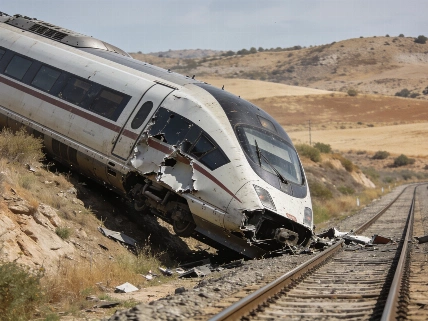
The disaster occurred shortly before 9 a.m. on 28 October 2026, near Urda in Toledo province. A Renfe train struck a stationary Iryo train; two Iryo carriages fell down an embankment, and four carriages derailed. More than 500 passengers were aboard the two trains. The disaster killed at least 69 people and injured around 200. The PP said it would observe the three days of official mourning while rescue work continued, then intensify its criticism of the government.
Transport Minister Óscar Puente said a computer malfunction had disabled a control system covering a 63-kilometre section at about 8:30 a.m. Trains in the affected section were told to stop, but the Renfe train was subsequently instructed to continue “as normal.” Puente called the order from the national train-control centre inexplicable. The Civil Guard and Spain’s railway accident-investigation commission were examining the incident. The control-centre official who issued the instruction was identified and questioned.
Inside the party, anger was directed beyond Transport Minister Óscar Puente. Several figures argued that his departure alone would not meet the demand for political accountability. They pointed instead to Sánchez, who appointed Puente and continues to support him. Some in the PP believed Sánchez would keep Puente in office as a political buffer. That was an assessment, not a confirmed decision.
PP spokesman Borja Sémper said on Onda Cero that the crisis extended beyond Puente to the government's wider approach to rail policy. Questions about rail maintenance had also featured in earlier Urda coverage. The collision was the second serious railway disaster on the same line in nine months. A preliminary report into the earlier crash identified a rail fracture that appeared to have occurred before the derailment.
The party registered a request for Sánchez to explain the accident before the Diputación Permanente. In its statement, the PP accused the government of poor management of the national rail system and said responsibility did not end with Puente. Prime Minister Pedro Sánchez announced three days of national mourning as rescue and recovery work continued alongside victim identification.