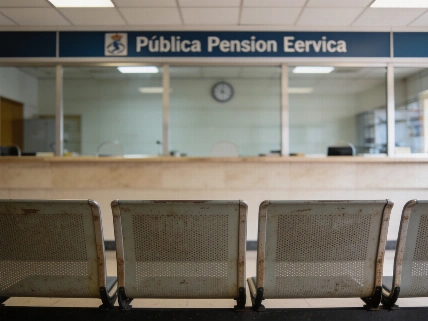
Social housing makes up just 1.5%-1.7% of Spain’s housing stock, compared with 6%-7% across the EU, according to the Comisión Europea. Iñaki Aliende argues that the next Economy Ministry should prioritise housing supply: shortages in areas with more jobs push up costs for vulnerable households and make it harder for workers to move. The European Commission has also linked inclusive urban growth to cities’ ability to retain talent and realise their productive potential.
The proposed response would mean making more land developable and speeding up permits, followed by new public tenders. Aliende calls for agreements between the State and autonomous communities, with town halls helping set measurable targets for homes started and completed. Support for vulnerable households should remain targeted and be assessed alongside new supply. Without more homes, aid can feed into prices.
Supply takes time to respond. Aliende also points to remote work and better public transport as ways to ease pressure on high-employment areas. He proposes revitalising municipalities whose residents have had to move to national growth centres.
Jobs are the other immediate pressure. The Comisión Europea says about two-thirds of small and medium-sized businesses struggle to recruit workers with the right skills; the FMI puts Spanish unemployment at 10%. Aliende calls for stronger dual vocational training and adult retraining, with employment services judged by whether people enter stable work and stay in it. The skills agenda also intersects with rules for private universities, covered in an earlier report.
Productivity will matter more as other sources of growth weaken. The FMI projected GDP growth would ease from 2.8% in 2025 to 1.8% in 2028 as demographic support fades and Next Generation funding winds down. Eurostat’s national-accounts database provides Spain’s GDP series in its main components. The European Commission’s long-term EU projections underline the demographic challenge: the labour force is expected to be 36 million smaller in 2080 than in 2025. Labour’s contribution to growth is projected to turn negative in the early 2030s, subtracting an average 0.3 percentage points a year over 2026-2080. KBRA has identified job creation and immigration as recent growth drivers, while warning that overall productivity remains modest. The Comisión Europea says output per worker has barely advanced since the pandemic, despite gains in output per hour. In its EU-wide projection, hourly labour productivity grows by an average 1.3% a year over 2026-2080. Total-factor productivity contributes 0.8 percentage points, with capital deepening adding 0.5 points.
Aliende’s proposals include evaluating research and development incentives by results, connecting universities with businesses and making it easier for young companies to obtain finance. The Comisión Europea reports that 82% of Spanish businesses see regulation as an obstacle to investment, compared with 69% across the EU. He also argues that public funds should complement private investment in small businesses’ adoption of AI. Support should be assessed by its effect on productivity and employment.
Public finances leave little room for complacency. Spain’s deficit fell to 2.4% of GDP in 2025 and debt to 100.5%, but KBRA says the improvement relied heavily on nominal growth and tax receipts. The FMI has called for fiscal buffers to be rebuilt as pension spending rises with an ageing population. Aliende proposes reviewing expenditure and tax incentives, with independent evaluation involving the AIReF. The FMI has suggested simplifying and harmonising VAT rates while compensating vulnerable households; KBRA and the Comisión Europea see scope to broaden tax bases and rely less on taxes on work.
The FMI assesses financial risks as low, saying households, businesses and banks have sound balance sheets. Rising house prices and signs of looser mortgage lending standards nevertheless warrant consideration of preventive measures, including closer coordination with the Banco de España and European supervisors. Deutsche Bank says non-bank lenders now control 51% of global financial assets, while banks hold 38%. Banks held 46% in 2008.
Energy and climate resilience also feature in the agenda. The Comisión Europea has called for stronger electricity networks and more storage capacity, alongside better water management and infrastructure adapted to climate risks. Aliende argues that these risks should be included in investment assessments and budgets. Temporary, targeted support should be ready for low-income households if an energy shock occurs.