The Ministry of Science, Innovation and Universities has opened a public-information process on Real Decreto 905/2025, which would tighten the rules for creating and authorising universities and university centres. The proposed changes aim to curb the creation of private and online universities; the process does not mean the new requirements are already in force. A consultation stage does not itself create binding obligations. Until a final text is approved and published in the Official State Gazette (BOE), existing authorisation and quality-assurance rules remain the operative framework.
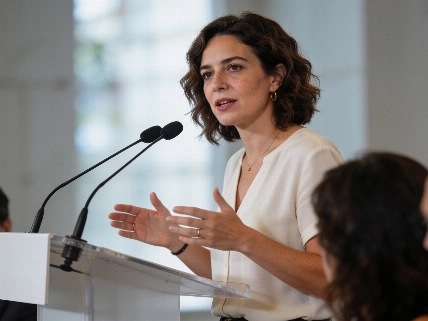
The ministry, led by Diana Morant, says the measure addresses the risk that university models could take hold without meeting the teaching and research standards historically associated with Spain’s universities. The material provided does not specify when the process opened or set a date for a final decision.
The figures accompanying the proposal say at least 10 of the Government’s 21 ministers, or 47.6%, have studied at private institutions. The count rises to 13 when private or state-subsidised schools attended during childhood are included. These figures cover study at university and postgraduate level, as well as schooling earlier in life; the broader count therefore includes experience beyond private-university attendance.
Pedro Sánchez studied at the Real Centro Universitario María Cristina de El Escorial, a private institution affiliated with the Universidad Complutense (UCM), and earned a doctorate in Economics at the private Universidad Camilo José Cela. Vice-President Carlos Cuerpo studied Economics at the Universidad de Extremadura before completing a master’s degree at the private London School of Economics and Political Science.
Other examples cited include Yolanda Díaz, who studied law at the Universidad de Santiago de Compostela and earned a qualification in personnel management and human resources from the Confederación de Empresarios de Galicia. José Manuel Albares and Fernando Grande-Marlaska both studied law at the Universidad de Deusto. Jordi Hereu completed business studies and a master’s degree at ESADE Business School. Elma Saiz studied at the Universidad de Navarra.
The account also identifies private postgraduate study by Arcadi España and María Jesús Montero, as well as a doctorate by Pablo Bustinduy at New School for Social Research in New York. Félix Bolaños’s connection is different: he taught at the private IE Law School, rather than being described as a student there. A separate university initiative, the Canary Islands’ funding for sustainability work at the University of La Laguna, is covered in an earlier university report.
For schooling, the figures name Mónica García and Margarita Robles alongside Morant as ministers who attended private or state-subsidised schools. The proposal, by contrast, focuses on the recognition and authorisation of private university centres, while also addressing their continued operation.