The €259,000 agreement covers the full cost of ten projects developed by the University of La Laguna (ULL), with all funding coming from the Vice-Council of the President’s Office. The Canary Islands Government said the projects aim to turn university research into practical proposals for the archipelago. The programme brings together the government’s Vice-Council, ULL and the ULL Foundation, and is intended to contribute to the Canary Islands Sustainable Development Agenda.
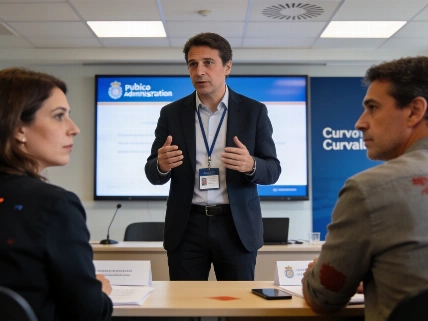
Octavio Caraballo, vice-council of the President’s Office, and ULL rector Francisco García presented the results. The projects are part of Compromiso de la Universidad de la Laguna con la Agenda Canaria 2030 (2025-2026), a programme covered by an agreement signed in late 2025. ULL also identifies the initiative as Compromiso de la Universidad de La Laguna con la Agenda Canaria de Desarrollo Sostenible (2025-2026). The work builds on initiatives from the 2024 and 2025 editions.
The ten projects cover climate risk, electricity decarbonisation, water use in hotels and access to housing for young people. ULL says the wider portfolio also covers energy planning, climate adaptation, youth housing, education, rural innovation, water management and sustainable tourism. The projects are titled Educación para el desarrollo sostenible: conocimiento, conciencia y compromiso con la Agenda Canaria 2030; Cultivando el cambio: Agenda Verde Universitaria; Plan de acción para el clima: análisis de riesgos y vulnerabilidades de los municipios canarios; Planificación estratégica para la descarbonización de los sistemas eléctricos de Canarias; Educación conectada para transformar Canarias: experiencias de aprendizaje conjuntas entre universidad y Formación Profesional en el marco de la Agenda Canaria 2030; Gestión sostenible del agua en el sector hotelero de Canarias: buenas prácticas para un turismo responsable; RuralLab Canarias: iniciativa universitaria para la innovación rural en el contexto de la Agenda Canaria 2030; Propuestas habitacionales desde la universidad: soluciones innovadoras para el acceso a la vivienda de la juventud de Canarias; Territorio, universidad y turismo: hacia un ecosistema inteligente y sostenible; and Lidescan: Innovación y Desarrollo Sostenible de Canarias.
Several projects set out practical approaches. The hotel-water initiative is preparing an inventory and a good-practice guide. Educación para el Desarrollo Sostenible aims to bring social, economic and environmental challenges to the university community through five practical experiences. Cultivando el Cambio promotes environmental awareness among university students and staff, along with actions that can extend beyond campus. Territorio, universidad y turismo aims to connect the university with the tourism sector through an ecosystem focused on intelligent and sustainable tourism.
Caraballo said collaboration with public universities helps bring academic knowledge into government policy. García said universities could help society consider future challenges and contribute research that addresses the needs of the islands. The arrangement gives the university a defined role in supporting public policy. Regional institutions have taken different approaches to policy coordination, as an earlier regional report showed.
Caraballo also called on public universities to join a government-led reflection process on the United Nations’ 2030 Agenda. The UN is expected to assess the agenda and review its 17 Sustainable Development Goals and 169 targets. The Canary Islands Government said it wants the archipelago’s status as an island region and an outermost region of Europe reflected in that work.
The proposed participatory process is intended to examine the islands’ medium- and long-term challenges and help define a “Canarias 2050” scenario. The government said universities and specialist organisations would play a central role in that reflection. ULL scheduled a public presentation of the ten initiatives for 12 November 2026 at 10:45 in the Aula Magna of its Central Building, in the Rectors’ Hall. Project teams will present progress and results through audiovisual pieces and interventions.