Carmen Romero was 36 when she moved into La Moncloa with Felipe González in 1982. He was 40. Their children were aged ten and eight, with the youngest four. The family arrived at the official residence after the PSOE won the 28 October general election with 202 of the 350 seats in Congress, or 57.7% of the chamber. González went on to serve as prime minister from 1982 to 1996, winning four general elections during his nearly 14 years in office. The family’s years at La Moncloa overlapped with one of the longest continuous premierships of Spain’s democratic period.
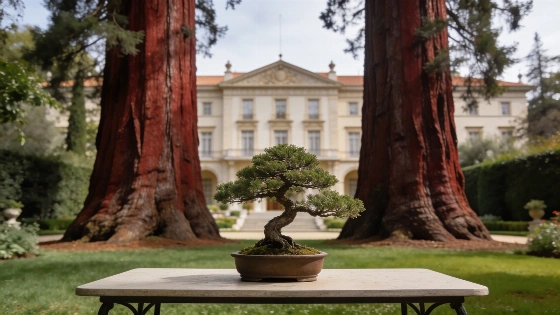
One detail stayed with Romero. In an interview with Vanity Fair, first published in April 2009, she recalled: “Cuando llegamos a La Moncloa nos asombró el jardín. Había dos secuoyas maravillosas. De ahí vino la afición de Felipe por los bonsáis”. She said the two redwoods in the garden sparked González’s interest in bonsai. By 1991, the hobby had taken him to Japan. During a trip near Tokyo, Japanese bonsai masters taught him how to prune the trees, while Romero watched. El País reported the episode in 1994. González continued cultivating bonsai after leaving government.
Romero also resisted expectations that she should take on a conventional first-lady role. Before the move, she taught Language and Literature at Madrid’s Instituto Calderón de la Barca. She continued working and requested the night shift to balance teaching with family life. Romero said the title did not reflect who she was and sought to maintain an independent career. Biographical accounts identify her as a literature teacher and PSOE politician. She and González had three children, Pablo and David, as well as María. The family’s private life at La Moncloa was closely guarded.
That independence also shaped her approach to the residence. Romero wanted to bring in more light and open La Moncloa to contemporary art. She proposed works by young artists, including Ferrán García Sevilla and Guillermo Paneke; Cristina Iglesias was another. She saw the residence as a public-facing showcase during a period of change.
She organised informal cultural gatherings in La Bodeguilla, a semi-basement space used for meetings with friends from the arts and literature. Romero said criticism of the guest lists sometimes treated people’s absence as deliberate. She did not have a personal relationship with every potential invitee.
The political visibility expected of a leader’s partner also features in RUSSPAIN.COM’s account of a PSOE rally appearance by Begoña Gómez. Romero, for her part, said she tried to keep La Moncloa from changing her or her children. The family left the residence after the PSOE lost the 3 March 1996 election to José María Aznar’s Popular Party. The Popular Party won 156 seats; the PSOE took 141. Leaving La Moncloa brought relief to the family and the prospect of recovering some privacy.
Romero later served as a member of Congress for Cádiz from 1989 to 2004. She also translated Italian literature, including Anna Banti’s Artemisia, a book about painter Artemisia Gentileschi. She worked on the translation while living at La Moncloa and later said she regretted not promoting it then.