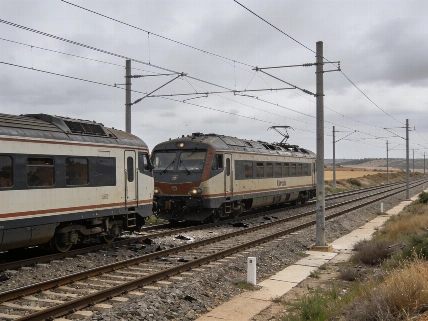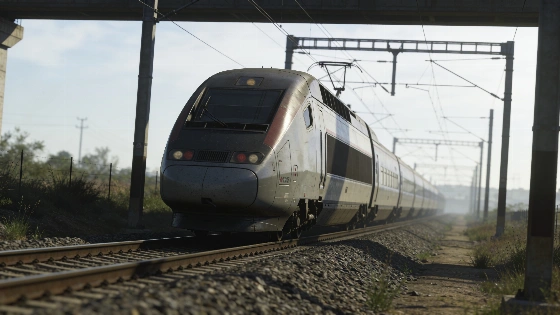
Madrid approved a repayable credit of up to €754,302,566 for Morocco’s rail operator on 11 February 2025.
The credit was intended to fund up to 40 intercity trains. Weeks later, the Moroccan government awarded CAF, a rail-vehicle manufacturer, a €600m contract for 30 trains, with an option to add 10 more.
The trains must include ETCS N2, part of the European Rail Traffic Management System (ERTMS). El Debate reported the requirement after accessing technical specifications from Morocco’s Office National des Chemins de Fer (ONCF).
The distinction matters on Spain’s Madrid-Seville line, where trains use LZB. Unlike LZB, ETCS N2 communicates by GSM-R radio between onboard equipment and a rail control centre. That link lets operators monitor train movements in real time and track speed limits.
Materials engineer Ricardo Díaz told El Debate that if ERTMS had been installed on the line, the Iryo train could have regained communication and continued moving instead of remaining stopped. That is a conditional assessment; the available information does not establish that the system would necessarily have prevented the Urda accident. RUSSPAIN has separately covered rail safety measures following two fatal accidents.
The Moroccan trains are designed to operate in temperatures of up to 55°C and in desert dust. CAF says they will be capable of reaching 200 km/h, with more than 500 seated places, including spaces for passengers with reduced mobility.