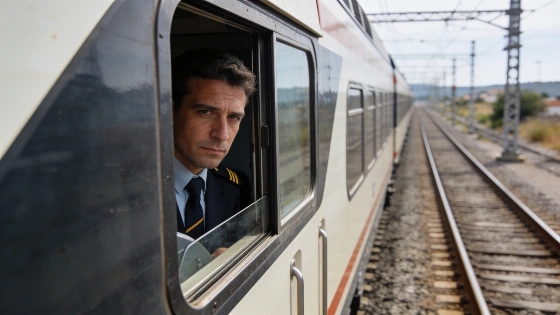
Measures approved by the Cabinet on Tuesday, 10 November, give train drivers the right to stop a service or refuse to start a journey when they identify a serious safety risk. Royal Decree-Law 34/2026, published in Spain’s Official State Gazette on 11 November, also creates confidential channels for railway workers to report hazards and shields them from retaliation. It expands the State Railway Safety Agency’s inspection role and clarifies how drivers’ working time is calculated.
The measures are central to talks on Thursday, 12 November, between Secretary of State for Transport José Antonio Santano and rail union representatives. Semaf and UGT are attending. CC OO is also at the meeting, along with Renfe president Álvaro Fernández Heredia and Adif executives. The decree follows union demands for clearer procedures when automatic train-protection systems fail and rules for operating in severe weather. Semaf has also called for a nationwide rule barring trains from immediately returning to normal speeds after a protection-system failure.
Two stoppages remain scheduled: one for 17 November, called by unions represented on Adif’s committee and by Semaf, and another for 23 November, promoted by train drivers seeking stronger safety guarantees and larger public-sector rail workforces. Semaf shifted its planned 12 November strike to the 23rd after the Cabinet approved the decree-law. The union said the measure reopened negotiations and gave the Government a limited window to publish its remaining safety commitments in the official gazette the following week. It called the decree tangible progress, but postponed the action rather than cancelling it.
The dispute follows the Adamuz accident in Córdoba on 18 January, where 45 people died in a crash linked in the source account to a suspected fault on the Madrid-Seville line. A second accident at Urda in Toledo on 28 October killed 69 people. The account links that incident to a protocol error at Adif’s Madrid traffic control centre. The accidents intensified drivers’ calls for better maintenance and stronger operational safety measures, as well as more staff. Semaf says commitments made after the earlier crash have not been fully implemented.
Rail workers have already taken part in a 24-hour stoppage and a general strike on the two days before Thursday’s meeting. The wider action also hit industrial workplaces, with disruption varying at car plants, according to a report on factory stoppages. The 10 November rail strike disrupted services nationwide, including Madrid’s Cercanías commuter network, where six lines were suspended and only occasional trains ran on two others. In Catalonia, minimum services for Renfe-operated Rodalies and regional trains were set at 66% during peak periods and 33% for the rest of the day on 10 and 12 November. Renfe said the train drivers’ strike clearly breached minimum-service requirements.
Transport officials are also offering Adif greater certainty over funding for network maintenance. A financing programme negotiated with the Finance Ministry over a year and a half provides for €19 billion through 2030, including funding for new construction. Reuters reported that further strike action remained scheduled for 17 and 23 November as negotiations continued.