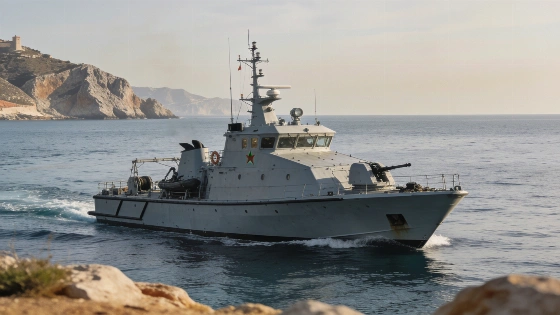
During the crisis that began on 30 July, ships of the Royal Moroccan Navy repeatedly entered Spanish waters off Ceuta without authorisation, according to Juan Luis Manfredi’s account. The Spanish Government described the incursions as an isolated incident with no repercussions.
Manfredi places the naval episodes alongside the mass arrival on the territory during the same crisis. He says those events involved pressure below the threshold of open war, where responsibility can be difficult to establish. The naval entries became known about 60 days later.
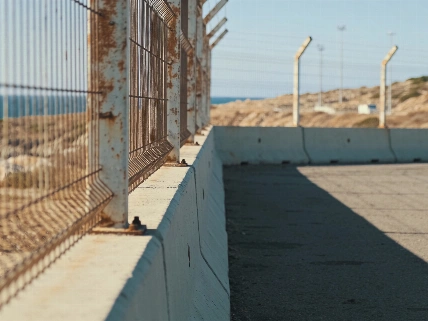
Ceuta and Melilla are Spanish-administered territories on Morocco’s northern coast and form the European Union’s only land borders with Africa. Morocco does not officially recognize Ceuta as Spanish territory, and the enclaves have long been flashpoints over sovereignty and border enforcement, with migration also part of the dispute, including crossings by sea and over perimeter fences.
The central legal uncertainty is whether NATO’s collective-defence guarantee covers Ceuta and Melilla. Manfredi’s answer is that the Washington Treaty does not provide them with immediate protection. Article 5 must be read with Article 6, which limits the treaty’s geographic scope to allied territory in Europe and North America, extending to islands in the North Atlantic north of the Tropic of Cancer. NATO’s general guarantee is that an attack on one Ally is treated as an attack on all, but invoking Article 5 is a political decision, not an automatic military response.
The Canary Islands fall within that guarantee. Ceuta and Melilla are in Africa, and Spain joined NATO in May 1982 without resolving the ambiguity over their status. Political assurances have since offered another layer of cover: the 2022 Madrid summit pledged to defend every inch of allied territory. In September, a senior Alliance official said NATO would respond if Spain invoked Article 5, while cautioning that a response would not be automatic.
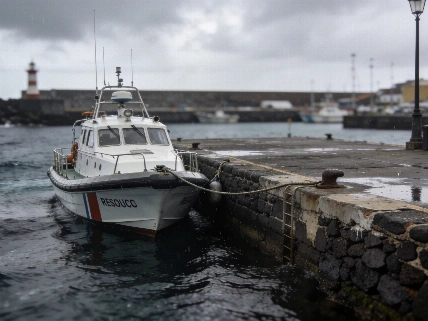
Manfredi argues that an attack on a Spanish Navy patrol boat in Ceuta’s waters could fit Article 6 more readily than an attack on the city itself. That distinction places a maritime incident near the boundary between hybrid pressure and conventional confrontation, without establishing that collective action would follow.
He considers a new Green March on the scale of 1975 improbable. His warning is instead about pressure involving migration and disinformation. It could also target critical infrastructure or take the form of border incidents. NATO has said since 2016 that a hybrid campaign could justify an allied response, but the threshold remains unclear. Manfredi says Spain would need to agree its response with Washington, Berlin, Paris and London rather than rely on a clear treaty red line.
The wider border relationship has also been shaped by diplomatic tensions over Western Sahara. Spain publicly shifted its position in support of Morocco’s proposal before relations were normalized; Reuters reported that Madrid had accused Rabat of using migration pressure as “blackmail” during the earlier dispute. The subsequent diplomatic reset did not remove the recurring border pressures.
The institutional response is another part of his argument. According to information cited in the article, the bodies of Spain’s National Security System responsible for crisis management were not activated because the incursions were treated as isolated incidents. Manfredi questions what those procedures are for if the repeated presence of a foreign frigate in Spanish waters is insufficient to trigger them.
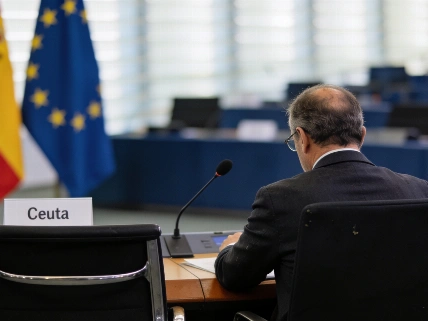
He says parliamentary scrutiny could have been strengthened through appearances by the ministers responsible for Defence and the Interior, with information shared subject to security restrictions. Contradictory statements and claims about intelligence services, he argues, do not help parliament perform that role. Clear public procedures matter elsewhere too: polling-station duties are governed by specific rules, while the crisis procedures at issue here were not activated.
Manfredi also calls for a defined diplomatic framework with Morocco, backed by the European Union. He describes Morocco as a neighbour and strategic partner with its own regional interests, as well as a key actor in migration control. His argument is that the consequences of actions and omissions should be agreed before a crisis, not improvised during one.
He wants Ceuta treated as a shared European border beyond emergency situations. That would mean a sustained Commission presence, including Frontex. Funding and technology would support police cooperation, with returns maintained as a permanent capability. Manfredi says this would strengthen Spain’s negotiating position and reduce its reliance on emergency bilateral arrangements.