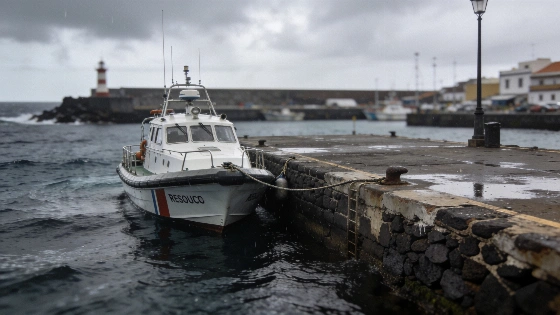
El Hierro, home to just over 12,000 people, received nearly 10,000 migrants in 96 cayucos during the November period covered by the report. More than 2,500 people arrived over one weekend, setting a rescue record for the Canary route in its 30-year history. On 15 November, 1,488 migrants reached the island in a single day, a new Canary Islands arrival high reported by Euronews. The island council had also reported more than 8,000 arrivals over five weeks.
The pace had accelerated sharply during November. EFE reported on 14 November that El Hierro had received 81 cayucos that month, almost six a day, and 147 during 2026 to that date, compared with 66 between January and October. Salvamento Marítimo recorded eight interventions and 843 disembarkations on Friday, followed by 382 arrivals in five cayucos on Saturday, for 1,225 arrivals across the two days. The previous highest daily rescue total cited was 1,461 people on 7 November 2020, when Arguineguín harbour in Gran Canaria was the archipelago’s main arrival point. The report said the boats came mainly from Senegal and Gambia, with others from Mauritania and Guinea. Their crossings could last from four days to a week.
The pressure on reception services led El Hierro’s island council to declare a social emergency on 6 November. On 10 November, Spain’s Interministerial Commission on Immigration agreed to declare a migratory emergency in the Canary Islands, allocating €15.18 million for additional places in state-run reception centres and transfers between islands and to mainland Spain. The decision followed regional figures showing 4,587 arrivals across the archipelago between 1 and 6 November aboard 49 boats, 35 of which reached El Hierro. The package also included an additional €1 million for Red Cross health support. Fernando Clavijo said commitments made at the commission had not been fully met, including the provision of health staff for El Hierro, and called for the agreed measures to be activated without delay. He also said Salvamento Marítimo had deployed additional vessels, but crews were working consecutive shifts.
Clavijo argued that diplomatic efforts to reduce departures from Senegal and Gambia had failed to curb arrivals. Anselmo Pestana, the Government delegate, said the state was doing everything possible and called Clavijo’s assessment unfair, EFE reported. In separate coverage of state intervention, RUSSPAIN reported on Plus Ultra’s restructuring.
Alpidio Armas, president of El Hierro’s Cabildo, described the arrivals as continuous and said the island could not keep people there without being overwhelmed. He said migrants generally stayed for 12 to 24 hours before being transferred to Gran Canaria or Tenerife, where reception facilities were also under pressure.
Armas cited calm seas and the comparatively easy route to El Hierro as factors behind the surge, while also pointing to limited surveillance off Senegal.