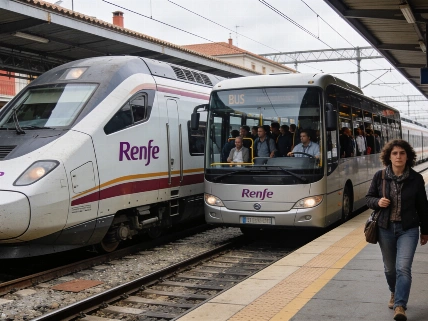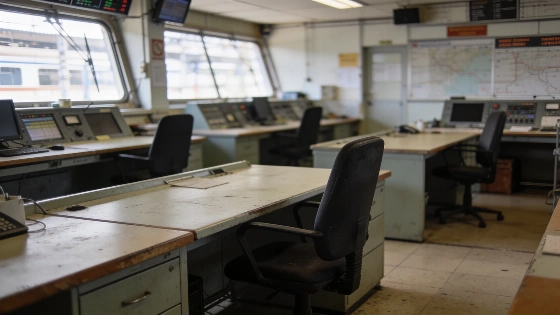
Hundreds of operator posts are reportedly vacant in Spain’s rail regulation and control centres, where reduced teams manage traffic under intense pressure. The staffing gap is central to a wider debate about how the railway is run after accidents at Adamuz and Urda, which occurred nine months apart. The 18 January collision at Adamuz, Córdoba, killed 46 people. On 28 October, a Renfe AVE train struck the stationary rear of an Iryo train near Urda, Toledo, on the Madrid-Seville high-speed line, killing at least 68 people and injuring more than 100.
Imanol García Sendón, president of the Association of State Civil Engineers (AICAPE), warns that regulatory bodies are weakening. He points to less attractive A1 civil-service examinations and experienced professionals leaving for the private sector over working conditions. In his account, people without engineering training increasingly fill responsibility posts; limited budgets also make it harder to retain staff. A separate report on rail-safety oversight said the relevant agency had missed audit targets for six consecutive years and ended 2025 with 129 employees: one senior official, 117 civil servants and 11 other employees. The report cited turnover and delays in filling vacancies as reasons some activities were postponed. Those figures relate to the safety agency, not staffing levels at Adif’s control centres.
The debate concerns the technical chain behind political leadership. A transport minister need not be an engineer: ministers set priorities and allocate resources, while answering politically for management. The question is who handles specialist decisions. Around thirty politicians and trade union figures appointed to senior roles at Renfe and Adif illustrate the influence of party and union affiliations.
Óscar Puente’s official curriculum records a law degree from the University of Valladolid, legal work from 1995 to 2015 and eight years as mayor of Valladolid. Fundación Jaime Vera awarded him a master’s degree in Political Management. He entered the ministry in November 2023 after a municipal and PSOE career; the curriculum lists no training in railway engineering or high-speed network operations. After the Urda crash, Prime Minister Pedro Sánchez said the investigation would establish what happened and why, and pledged to pursue it fully.
Germany offers a different model in the examples cited. Deutsche Bahn chief executive Evelyn Palla has more than a decade of direct experience with operators including Austria’s ÖBB. Philipp Nagl, named head of DB InfraGO, has a doctorate in transport economics and experience in network planning. In September 2025, unions and supervisory boards opposed an attempt by the German transport minister to appoint a political ally, and blocked it. That professional check contrasts with appointments in Spain, including Ángel García de la Bandera’s appointment as Adif’s director general of operations.
The Japanese examples also place weight on technical experience. Transport minister Tatsunori Ibayashi is an environmental engineer who studied at Kyoto University and worked in the ministry’s technical ranks before entering parliament. At JR East, the country’s main operator, executive vice-presidents with decades of company experience oversee corporate safety.
Technical expertise cannot eliminate human or mechanical failure. On 3 June 1998, an ICE train derailed at Eschede after a wheel rim broke, killing 101 people. The disaster led to changes in ultrasound checks, switch design and the use of monobloc wheels. In Spain, preliminary reporting on Urda has focused on an LZB safety-system failure and the response at Adif’s Atocha traffic-control centre. The reported sequence involved a stalled Iryo train and an instruction allowing a Renfe AVE service to resume movement. Transport Minister Óscar Puente called the instruction inexplicable and said the control-centre official had been identified and was being questioned. Railway union spokesperson Joan Rodríguez cautioned against blaming an individual before examining the operational conditions. The technical and judicial investigations into Urda remained open, as did the inquiry into Adamuz.
Spain has also begun restructuring its transport accident-investigation bodies, replacing the Railway Accident Investigation Commission (CIAF) with a multimodal independent authority covering rail, maritime and civil aviation accidents and incidents. CIAF had been leading the Adamuz investigation. The reform is proceeding alongside separate judicial inquiries into the two crashes. Investigations into Adamuz and Urda should examine administrative management as well as safety systems. The case also cites former Greek infrastructure and transport minister Kostas Karamanlis’s resignation after the Tempe rail disaster, which killed 57 people.