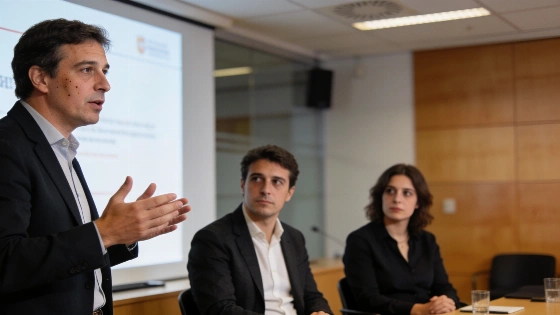
The generation that did not experience the fall of the Berlin Wall has inherited an international order under strain. At a discussion organised by Grupo Prisa with the Fundació Princesa de Girona, speakers linked the shift to a retreat in the United States’ global role and declining confidence in democracies. An analysis in the European Journal of International Security describes the postwar order as one in which the United States served for decades as Europe’s strategic guarantor, with its leadership embedded in legal and institutional arrangements.
The session, titled El mundo en 2026: la mirada de la generación que no conoció el Muro de Berlín, was moderated by Nacho Corredor, a political scientist and co-founder of beBartlet. Diego Garrocho, a professor of Moral Philosophy at the Universidad Autónoma de Madrid, joined international consultant Noor Ammar and writer Alfonso Goizueta.
Goizueta said Europe must adapt to a United States less committed to defending the liberal international order. He argued that the retreat did not begin with Donald Trump and had started under Barack Obama.
That challenge also concerns how democratic principles are passed on. Garrocho said younger people lack direct experience of the major ruptures of the 20th century, and argued that their lessons had not been adequately preserved. He also blamed an unhealthy media environment for worsening public debate.
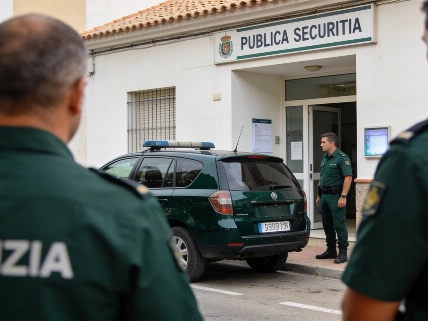
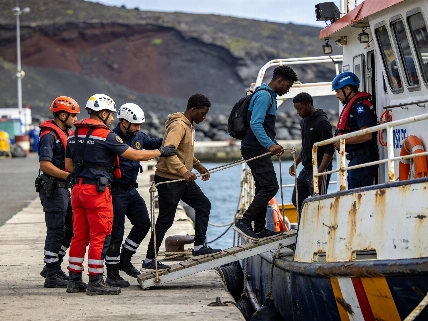
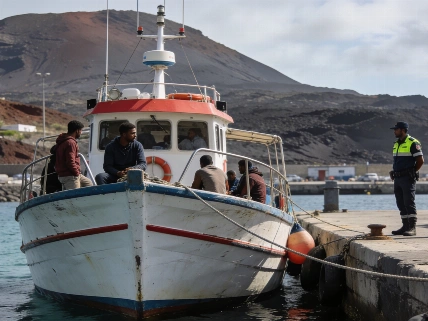
Ammar focused on security and the treatment of people seen as different. Referring to recent episodes at the Ceuta border, she argued that divisions are shaped by inequality as well as territory. When people treat others as threats, she said, it becomes extremely difficult to negotiate with them. The European Commission later included a mass-arrival incident in Ceuta on 30-31 July 2026 in its assessment of Spain’s migration situation. On 6 November, as it launched its second Annual Migration Management Cycle under the EU Pact on Migration and Asylum, the Commission classified Spain as being under migratory pressure. Its assessment covered July 2025 to June 2026 and reported that Spain accounted for around 20% of irregular EU border crossings and ranked third for arrivals connected with search-and-rescue operations. Applications for international protection in Spain fell by 22%. The classification makes Spain eligible to request EU solidarity support in 2027, alongside Italy, Greece and Cyprus.
The panel also addressed how young people are described. Garrocho challenged labels carrying negative associations and said young people are educated and committed. His emphasis was on giving them the tools to face the future.
The discussion of public trust is separate from the Urda rail tragedy report, which covered Óscar Puente’s resignation after two accidents of comparable severity in less than a year.