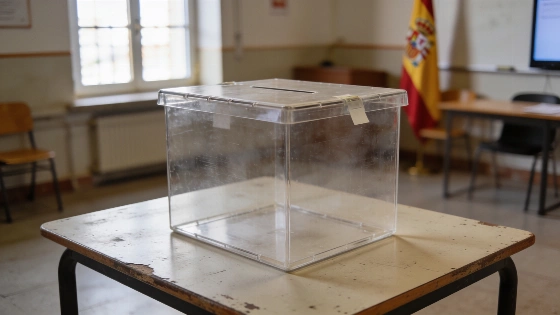
A strawberry and a bunch of grapes stood in for political choices in a series of posts on X ahead of Spain’s 29 November vote. The Partido Popular in Valencia has asked the Junta Electoral Central (JEC) to investigate whether the messages concealed election polling.
The complaint concerns three posts by Vicent Mascarell, secretary of organisation of the PSPV-PSOE and deputy to Diana Morant. In one, he wrote that 36 hours remained before the season closed and referred to a growing strawberry and grape. The post associated the strawberry with the PSOE and the grapes with Frente Amplio. The figures resembled those published by several media outlets on the Friday before the vote; the posts did not identify their source.
The PP asked the JEC to determine whether the fruit and colours represented survey results and whether the posts breached electoral rules. It requested sanctions if the board finds an infringement. The complaint is an allegation, and the JEC is being asked to decide whether the posts breached the law.
Under article 69.7 of Spain’s Organic Law 5/1985 on the General Electoral Regime (LOREG), publishing, distributing or reproducing election polls by any means of communication is prohibited during the five days before voting. Article 69.2 assigns the JEC oversight of compliance, including the technical disclosure rules and the polling blackout, and directs it to guard against deliberate falsification, concealment or modification of poll data. Article 69.1 requires published polls to identify the commissioning and conducting entities and disclose technical details including the sampling system, sample size, margin of error, representativeness, fieldwork dates, question wording and nonresponse figures. The JEC’s interpretation of the LOREG also includes Instruction 3/2019, which addresses articles 50, 53 and 69.7. Article 53 separately bars electoral propaganda and efforts to solicit votes during the restricted period, including on social media accounts belonging to public officials and political parties.
The JEC has previously applied the polling ban to coded posts. During the 2022 Castilla y León elections, Electomanía.es published daily estimates under the name ‘EmojiPanel’, using food and emojis to represent parties. The board found that the posts breached article 69.7 and fined Rodrigo Panero Fernández, the sole administrator of publisher Argentum Analytics, S.L., €3,000 on 26 May 2022. Its decision said the colour associations made it possible to link the percentages to voting intentions.
Other JEC cases have involved campaigning on social media. In 2015, the board fined the Interior Ministry’s communications chief €600 after the ministry’s official account posted a montage of Adolfo Suárez voting in 1977 alongside Mariano Rajoy heading to the polls. The JEC found that the image breached the public authorities’ neutrality duty under article 50.2 of the LOREG. In 2019, it fined Manuela Parralo, then the Government’s deputy representative in Huelva, €1,500 over two posts seeking votes for the PSOE and criticising other parties. The LOREG also contains a dedicated electoral-offences provision, article 145, titled “Delitos en materia de encuestas electorales.”
The PP has also brought other election-related complaints to the central board, including its Madrid campaign-mail complaint. In Mascarell’s case, the party’s request asks the JEC to examine the posts of 26, 27 and 28 November and decide whether the electoral rules were breached.