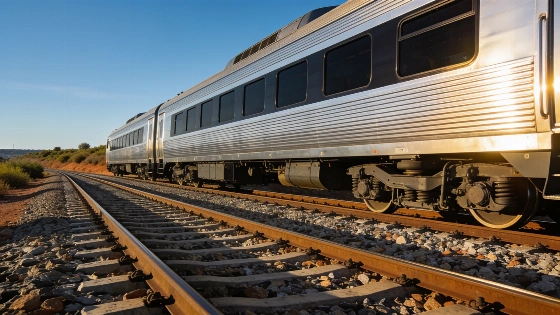
The Alvia was travelling at 208 km/h when it struck derailed Iryo wagons in Adamuz, according to a technical report drawn from the train’s telemetry. The report records no manual braking before impact. An automatic emergency brake was applied only four seconds before the data ended. The collision occurred on 18 January 2026 on the Madrid-Seville high-speed line in Córdoba, about nine seconds after the Iryo train derailed. The crash killed 46 people and injured more than 150.
Actren prepared the report at the request of Tribunal de Instancia de Montoro Plaza nº 2, which is investigating the crash. EL ESPAÑOL-Invertia reported that the maintenance company used data collected by CAF’s LeadMind system to reconstruct the sequence. Reporting places the derailment site around kilometre 318.386-318.681 of the line.
About 50 seconds before the collision, roughly 3,000 metres from the impact point, the cab recorded a command to raise the train’s target speed from 210 km/h to 245 km/h after it passed a neutral section. The records show no manual operation of the emergency brake or direction reverser. They also show no use of the emergency button or horn, and confirm that the safety systems had not been disabled.
The LZB system then applied the emergency brake at 217.7 km/h. That was four seconds before the LeadMind records stopped. Actren’s analysis says the driver, who died in the collision, had no remaining opportunity to react manually.
Actren reconstructed the sequence because investigators could not initially access the Judicial Recorder, or JRU. Its technicians used real-time transmissions from the train’s PC-BOX to LeadMind and corrected a 2-minute-and-22-second error in the train’s internal clock. LeadMind monitors train status and stores operating data for later analysis.
The reported 208 km/h impact speed is higher than the 204 km/h figure associated with the Iryo when it derailed, established after the black boxes from both trains were opened in March. The figures concern different trains and events: LeadMind telemetry places the Alvia at 208 km/h at impact, while the Iryo recorder analysis gives 204 km/h at derailment. The black-box examination took place at the former CIAF, now the Autoridad Administrativa Independiente para la Investigación Técnica de Accidentes e Incidentes Ferroviarios, Marítimos y de Aviación Civil (AITAT).
Actren’s report found no fault or incident in the Alvia’s safety systems before the collision. It concludes that the train was operating within normal parameters and points to the earlier derailment of Iryo 6189 and the condition of the infrastructure as the origin of the crash. Separately, three court-appointed engineering experts have identified a rail fracture potentially associated with a defective weld, along with ground subsidence, as a preliminary explanation. Euronews reported that the findings remain preliminary and are not a final report approved by AITAT. Investigators have also focused on a 6.4-millimetre track irregularity recorded in October 2025. A depression at the break location had been detected and corrected during inspections in September, then reappeared in October. AITAT has commissioned the Spanish National Research Council (CSIC) to examine the fracture’s type and mechanism, including how it started and developed before it broke. The investigation concerns the rail accident; a separate RUSSPAIN.COM report covered Cyrcel’s repair network.
The Alvia’s secondary Deuta recorders remain missing. The Guardia Civil told investigating judge Cristina Pastor that finding them was impossible. After two unsuccessful searches in October among the wreckage stored in Dos Hermanas, technicians found the empty metal cabinets but not the recorders.
The Iryo’s own legal recorder showed it was travelling at 204 km/h without mechanical or electronic faults when it derailed. The train was operating under LZB supervision and following the signalling information available to it. Its GPS data placed the front of the train beyond the point where the rail had fractured. Some affected axles continued moving for a short distance while derailed, before any alarm sounded.
AITAT’s technical inquiry also covers passenger injuries, carriage interior dynamics and passive-safety measures. Reporting published on 28 November said at least nine significant technical studies remained outstanding. The court process continues alongside AITAT’s investigation, with the CSIC fracture analysis among the pending studies.