A repair can become uneconomic when a new component pushes the bill too high. Cyrcel says its new Spanish platform is designed to address that gap, linking recycled-part supply with workshops and a route to buy and repair damaged vehicles.
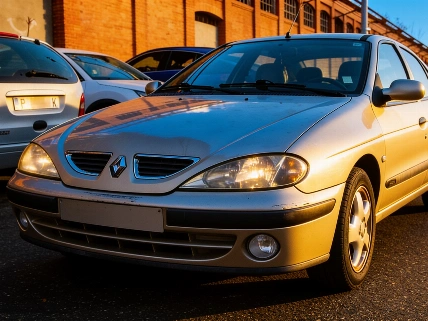
Cars repaired in Spain average between 18 and 19 years old, according to Solera figures presented at Posventa Iberia 2026. Their lower value can make a repair uneconomic: labour and paint cost the same as for a newer car, while fitting a new part may tip the bill beyond the vehicle’s value.
Cyrcel’s alternative is a recovered and checked original manufacturer part, identified by its OEM reference and covered by a 12-month group guarantee. The company says these parts cost 45% less on average than new ones, citing reports from independent organisations. Even with that saving, recycled parts account for 5% of components fitted in Spain, according to the company.
EU policy proposals distinguish economic irreparability from technical irreparability: a vehicle is economically irreparable when its market value is lower than the cost of restoring it to a condition sufficient to obtain a roadworthiness certificate in the Member State where it was registered. A vehicle can therefore remain technically repairable even if repair costs exceed its post-repair market value. Insurance Europe has similarly argued that economically total-loss vehicles should not automatically be classified as end-of-life vehicles; it says only technically total-loss vehicles are truly irreparable. The proposed framework also includes monitoring the reuse, recycling and recovery of vehicle parts, components and materials.
Spain’s end-of-life vehicle figures provide a broader picture of parts recovery: Eurostat recorded a 94% recovery-and-reuse rate and an 85.8% recycling-and-reuse rate in 2017. These figures concern end-of-life vehicle waste management. Separately, the National Statistics Institute reported €9,217.076 million in 2021 turnover for motor-vehicle and motorcycle maintenance and repair. Its vehicle-trade statistics recorded €12,850.584 million in spare-parts purchases across the sector that year, including €188.720 million by maintenance-and-repair businesses and €7,792.652 million by parts-and-accessories sellers.
Supply delays are another use case. Cyrcel says some European and Chinese manufacturers have problems supplying new parts, leaving cars waiting and workshop bays occupied. Recycled components may offer an available route to repair in those cases, although the company gives no figures for how often they are in stock.
The parts operation draws on DelfinCar and Otoniel, with Tamayo also among the suppliers. Cyrcel’s dsi.mobility network has more than 650 associated mechanical and bodywork workshops across Spain, and has handled 16,000 repairs so far in 2026 for insurers and leasing firms, as well as fleets. A separate route through AutoSubastas lets workshops buy damaged vehicles for repair and resale.
Workshop technology also covers fault identification: a photo-based diagnosis tool reported earlier links submitted fault codes or phone images to official repair guidance. Cyrcel’s stated focus is different: parts availability and the economics of carrying out a repair.
For repairers, the business case depends on getting paid and having the part’s guarantee honoured. Cyrcel says it has financial backing from HENKO Partners and an industrial group with treatment centres and a workshop network, alongside remarketing operations. Its chief executive, José Carlos del Valle, argues that the market needs greater scale for recycled parts, backed by guarantees and reliable availability.