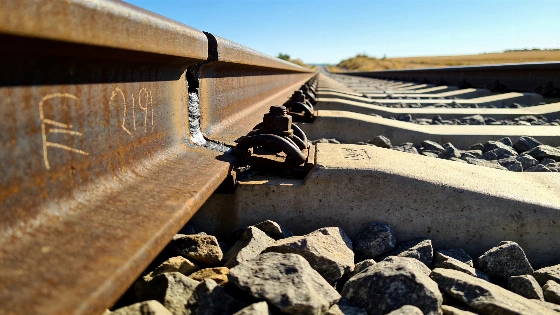
The original paperwork for the Adamuz rail weld appeared to identify a material that breached Adif rules, yet the discrepancy escaped checks after the work. It also indicated that the welding had been done without a specialist inspector. An Ayesa inspector amended the record on 29 January, 11 days after the crash that killed 46 people and injured more than 150. The correction said the kits for welds 5 and 6 had been entered in the positions for welds 3 and 4, and vice versa. It attributed the mix-up to a welder’s recording error.
The Civil Guard’s Córdoba Judicial Police unit reported the change to Montoro judge Cristina Pastor Recover in a document sent on 24 November. By the time the record was corrected, investigators had already identified the joint between two rails as the suspected origin of the derailment. The Civil Guard also said it could not locate documentary proof that ultrasonic testing had been performed on the implicated weld. Former Transport Minister Óscar Puente had said on 23 January that all 114 welds on the section had passed controls.
The document adds to earlier reporting that 47 trains crossed the broken rail before the Iryo derailment, described in an earlier rail inquiry report. Aitat, Spain’s railway investigation authority, has separately warned that current safety systems may not detect a comparable fracture before another train passes over it. Its report said detecting the break before a train reached it would in all probability have prevented the derailment. The current investigation is also examining whether checks after the track renewal could have identified problems.
Adif’s safety file for the works identified insufficient geometric track control before reopening as a derailment risk. The Civil Guard says the infrastructure manager nevertheless set aside checks at the route’s maximum speed, although its own rules provided for them after full and partial renewals. The project covered the replacement of 43 track switches. The Civil Guard also reported that it could not find documentary proof of ultrasonic testing on the failed weld, as investigators examine records for the section’s 114 welds.
On 26 June 2025, about a month after the replacement work at Adamuz ended, the Séneca inspection train examined the line at 80 kilometres per hour. Its instruments recorded unusual accelerations near the site of the later crash. On 8 September, travelling at 221.8 kilometres per hour, it registered vertical accelerations of 51.6 and 38.2 metres per second squared. The first exceeded the threshold that required Adif to intervene. Investigators also recorded a 6.4-millimetre track irregularity near the later fracture in October 2025; court-appointed engineers said it may have contributed to the rail failure. A dip at the break point had been detected and corrected in September, then reappeared the following month.
Measurements taken between 15 October and 21 November showed a 23.5% increase in another dynamic defect in the same area. The Civil Guard says the anomalies may have contributed directly to the break in the opposite rail. A train-cab recording from 31 October 2025 showed abnormal ballast distribution and missing stone beneath at least four sleepers near the later fracture. The Civil Guard’s report also said that ballast and sleepers at the accident site dated from 1990, along with other parts of the rail infrastructure, and that about 85% of the track was 36 years old. Investigators have begun seeking the identities of senior officials at Adif and the State Agency for Railway Safety. The report notified the judge of the control failures on 24 November.
Three court-appointed engineers, in a preliminary report dated 20 November, identified a broken weld as the most probable origin of the 18 January 2026 derailment. They also cited ground movement, with track deflection amplifying dynamic effects. They described the weld failure as involving poor execution in joining two rail sections. Their findings remain preliminary, with further technical testing outstanding.
Separate analysis of the Iryo train’s JRU records found no evidence of a vehicle fault before the derailment. Europa Press reported that a technical report dated 21 November identified 19:43:33.462 on 18 January 2026 as the point when recorded system changes began; that location coincided with the accident site. The report concluded that the subsequent anomalies were consistent with the derailment and collision, rather than preceding faults that could have triggered them.
The records show abrupt changes across the train’s systems from that moment, including its high-voltage supply. The analysis covered service Iryo 6189 and was based on a judicial examination of data from the two trains’ recorders on 12 November. Investigators have also sought accelerometer data from Renfe trains that travelled through the Villanueva de Córdoba–Alcolea section on 17 and 18 January to check for abnormal accelerations or other signs of track anomalies before the crash.