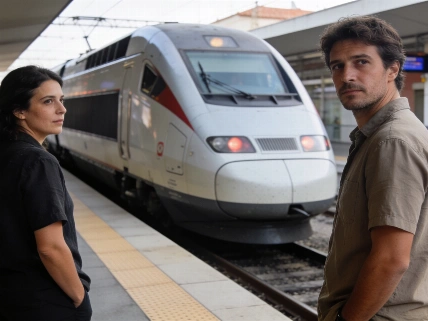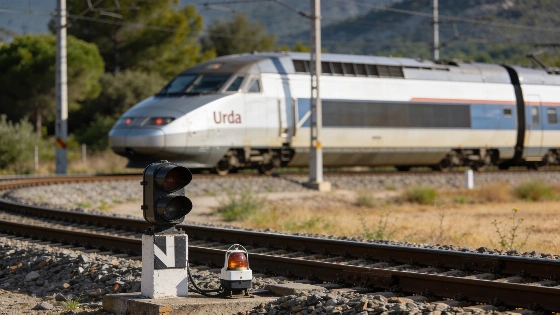
At about 08:30 on 28 October 2026, the LZB signalling system failed while six trains were stopped in the Urda area, railway engineer Carlos Sánchez de Roda says. At least 69 people died when an AVE and an Iryo collided in Toledo. The rear-end impact happened at about 08:53 near kilometre 118 between Los Yébenes and Urda, on the Madrid to Córdoba high-speed line. The AVE, service 02080, was travelling from Madrid Atocha to Sevilla Santa Justa with 397 passengers; Iryo service 6076 carried 147 people. Several carriages derailed and fell down an embankment.
Transport Minister Óscar Puente attributed the accident to human error, while saying the investigation would establish what happened. Sánchez de Roda argues that a controller’s decision may have been the final link in the chain, not its source. He points to a possible second technical failure: the ASFA backup system. Puente described the preliminary account of an instruction allowing the AVE to proceed as inexplicable.
Sánchez de Roda is a civil engineer who worked in railways at Renfe and ADIF for 32 years. He says the LZB system failed, leaving traffic to be managed through BSL, or lateral signalling block, with trains guided by physical signals beside the track. LZB continuously supervises train movements and transmits signalling information. In high-risk situations, it can activate automatic braking. Reports said the outage triggered a fail-safe stop across the section, halting six trains over an area described as approximately 63 kilometres; other accounts put it at about 69 kilometres.
Under that arrangement, he says, the control centre can authorise a train to pass a red signal and proceed at sight. The ASFA system, short for Anunciador de Señales y Frenado Automático, should still monitor whether the driver obeys those signals. Trackside beacons trigger emergency braking if a train passes a red signal without slowing sufficiently.
In Sánchez de Roda’s assessment, ASFA did not intervene in Urda. He says it should have operated even after the LZB failure, and that its braking function would have prevented the collision. That is his assessment; Puente has said the investigation will determine the cause. The AVE travelled approximately 26 kilometres after resuming its journey before striking the stationary Iryo.
The dispatch decisions also matter to an earlier report on recordings, which said the AVE was cleared to move at normal speed while the Iryo remained stopped. Spain’s Transport Ministry said the Atocha control centre authorised the AVE to resume at about 08:36, roughly 17 minutes before the collision. Ministry sources said trains should have proceeded at “speed at sight,” generally described as a maximum of 40 kilometres per hour, rather than at normal speed. Sánchez de Roda says the operator was seeking guidance from a superior. He considers it possible that the train was authorised to leave because the next block was empty.
He also disputes the minister’s account of the Iryo’s movement, saying information available to him indicated it had not received permission to resume. Renfe said its AVE had received the necessary authorisation to continue, while Iryo said the reason its train remained stopped was unclear. Sánchez de Roda says recordings from the control centre and the trains’ event recorders will help clarify the sequence. A judicial inquiry has opened, with Orgaz Investigating Court No. 2 handling the proceedings and a separate technical investigation under way.
For Sánchez de Roda, a signalling failure should not leave movement decisions to an individual controller. Trains should not be allowed to run after a safety system fails.