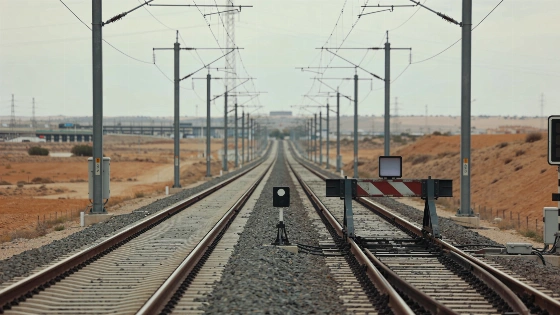
Spain's high-speed network stretches 3,924 kilometres and has cost more than €60 billion. The scale lends weight to Pedro Sánchez's assessment that public confidence in the system has been broken, as Enric Juliana argues in his analysis of the political fallout.
The network has had support from successive governments. José María Aznar promised in 2000 to bring every provincial capital within four hours of the centre of the peninsula; José Luis Rodríguez Zapatero also pledged high-speed links to all provincial capitals. The project had backing from the Partido Popular and PSOE, as well as the Partido Nacionalista Vasco and Convergència i Unió.
The promise remains incomplete. High-speed trains do not yet reach the Basque Country, and there is no high-speed connection between Barcelona and València. Juliana says the network has received more than €60 billion in investment, with 25% financed by the European Union. Spain also invested €3.7 billion of its €80 billion in Next Generation funds in high-speed rail.
Juliana places the latest accidents in a longer record. He puts the combined toll from Angrois, Adamuz and Urda at 195 deaths and 500 injuries. At Angrois near Santiago de Compostela on 23 July 2013, an Alvia train entered a curve at 191 kilometres per hour where the maximum was 80. According to his account, the ERTMS automatic braking system had been disconnected after software problems caused stoppages and delays. The driver was convicted and is awaiting a possible pardon.
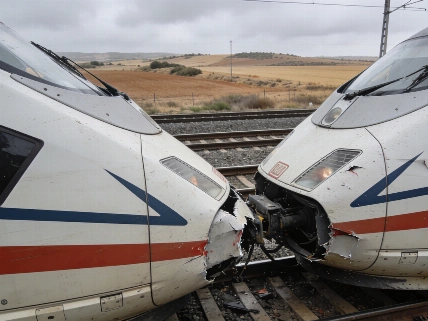
The Urda collision occurred on 28 October 2026, when a Renfe high-speed train struck a stationary Iryo train on the Madrid-Seville route. Reuters reported that the death toll had reached at least 69 by 30 October, while victim identification continued. Spain’s Independent Authority for the Technical Investigation of Accidents and Incidents issued a preliminary account that put the Renfe train’s speed at between 160 and 200 kilometres per hour. It described a chain of malfunctions, instructions and actions, without making a final determination of responsibility.
Puente has rejected the idea of using a worker as a shield. Juliana says the minister attributed the Urda accident to an unexplained error at the Atocha control centre, while the rapid release of control-room audio risked placing the moral burden on a young controller. Puente described a computer communications failure that automatically stopped several trains on a 63-kilometre section of track. An erroneous decision then restarted the Renfe train. The preliminary account said the service was authorised to continue despite a protocol requiring a maximum speed of 40 kilometres per hour in those abnormal conditions, while the Iryo train remained stationary ahead. The technical investigation remained open. The account says Puente has made his position available to Sánchez, who considered his departure unfair. By 30 October, Puente had rejected calls to resign. The minister is due to appear before the Permanent Deputation of Congress on 3 November.
The political consequences are already a focus in related coverage of the Partido Popular's response to the disaster, including a report on its response. Comisiones Obreras and UGT have called a strike over housing costs for 11 November, while the general election is scheduled for 29 November.
Puente has also raised the possibility that the Madrid-Barcelona high-speed line may need to close for more than a year for a full safety overhaul. That possibility contrasts with his announcement eleven months earlier of plans to raise speeds on the route to 350 kilometres per hour and cut journey times to two hours. Juliana's account confirms no closure decision.
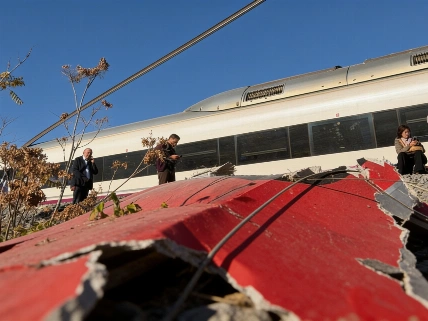
The Urda crash followed the January 2026 Adamuz disaster, in which 46 people died after a high-speed train derailed and collided with an oncoming train on the same Madrid-Seville corridor. Reuters described the Urda collision as Spain’s second mass-fatality rail disaster of 2026 and the deadliest European rail accident since 2013. Puente said the Renfe train had been authorised to proceed despite an active red signal with a stationary train ahead.