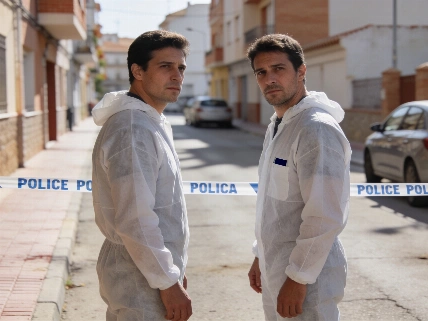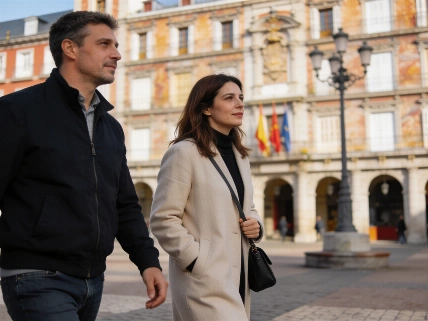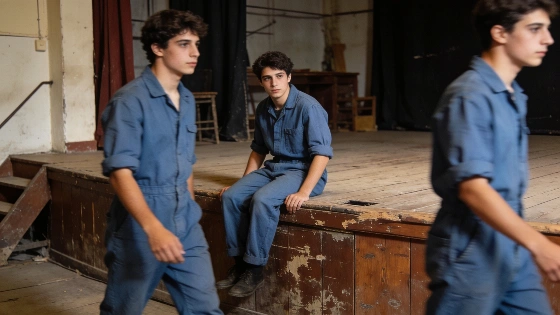
Rafael Rodríguez Rapún died in Santander on 18 August 1937 after an air raid wounded him. He was 25. He fought for the Republic and also worked as an actor and footballer. He had served as secretary of Federico García Lorca’s La Barraca. Historian Pedro Corral says the film La bola negra gives a different account, presenting Rodríguez Rapún as a prisoner executed by Francoist forces.
In Cómicos en guerra, Corral traces Rodríguez Rapún’s final days to the Republican front in Cantabria. An artillery officer, he was stationed near Bárcena de Pie de Concha when Francoist aircraft attacked Republican reserves on 17 August. Shrapnel wounds to his back and lower back led to his evacuation to a Santander field hospital. He died there the following day and was buried at Ciriego cemetery.
Rodríguez Rapún died on the date Federico García Lorca had been murdered in Granada a year earlier. He had not been captured by Francoist forces. The film’s imagined relationship between him and a prisoner under his watch draws on his wartime story, but the execution shown in the fiction did not happen. The 1937 storyline builds on Alberto Conejero’s play La piedra oscura, published in 2013 and premiered at Madrid’s Teatro María Guerrero in January 2015. The play imagined Rodríguez Rapún’s final hours with a fictional Francoist soldier. The film places that invented encounter in a narrative spanning 1932 to 2017, with the events of 1937 at its centre.
Corral also draws attention to the killings of La Barraca members and associates in the Republican rear. In his account, Lorca was the exception: the others he identifies as shot there were killed by the Republican side. One was actor Eduardo Ródenas Llusía, a 20-year-old member of Falange Española’s National Council, killed in Madrid on 7 August 1936, eleven days before Lorca.
Militiamen from the Unified Socialist Youth detained Ródenas and took him to a checa at the Círculo de Bellas Artes. He was killed on the road to La Coruña. Painter and set designer Alfonso Ponce de León Cabello had created several sets for La Barraca. After members of the socialist checa known as La Motorizada detained him, he was found dead near Vicálvaro on 27 September 1936.
Another case was Ambrosio Fernández-Llamazares, a former resident of Madrid’s Residencia de Estudiantes. He joined the rebel forces in León as a reserve second lieutenant. Republican forces surrounded positions at the Somiedo pass in October 1936, and the defenders surrendered. Fernández-Llamazares was killed in the days that followed.
The historical record also includes members who died fighting for the Republic. Others went into exile or faced imprisonment after the war. Rodríguez Rapún’s death followed a documented air raid, while the killings in the rear guard form a separate part of the group’s wartime history. Lorca has also featured in political coverage: a report on a Granada rally described Pedro Sánchez invoking the poet in a dispute over culture.