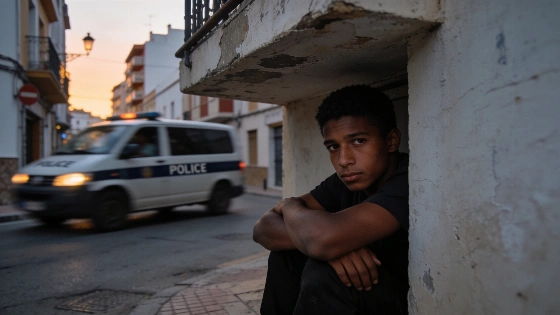
Ayoub, a 15-year-old boy, was still sleeping on a family’s sofa in Ceuta after two weeks without a place in official accommodation. The family feared that a planned door-to-door check for people without regular status could jeopardize their ability to help him.
That was one part of a difficult picture three months after the mass arrivals in July. At least 72,000 migrants crossed from Morocco into Ceuta on 30 July, Reuters reported, citing the judicial investigation into the crossing. The investigation recorded 82 deaths on the Spanish side of the border and 14 more in Morocco. Nearly 14,000 people had been returned across the border to Morocco, information from figures in the account. About 7,000 remained in reception centres, while the executive led by Juan Jesús Vivas estimated that another 4,000 had yet to be identified. By 31 October, Ceuta’s regional government reported that around 7,500 people were housed in facilities set up after the arrivals, with an estimated 3,000 to 4,000 more outside government accommodation. It put the number of minors in care at 3,626, or 125 times the usual capacity of the child-reception centres.
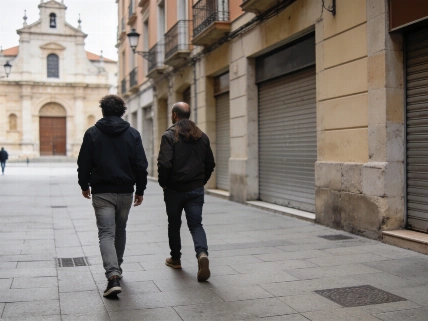
In the city centre, daily protests had largely faded and shops were busy again. Residents in peripheral districts described a different reality: police conducted raids across neighbourhoods in search of migrants, while some people continued to sleep in abandoned cars or passageways. Daniel, who lived in La Pantera, said he still feared that migrants were nearby.
Oussama, 26, was staying in Los Rosales with a fractured foot and a dislocated shoulder after falling down an embankment while fleeing a patrol. He feared being returned to Morocco before an operation scheduled at the hospital. Neighbours brought him food and helped with his care. His brother watched for police in case they had to run.
People taken to the Temporary Foreigners’ Attention Centre, known as the CATE, were identified and told about their options. Migrants were told a return would be voluntary if they agreed to go back immediately; those who insisted on staying could face a return procedure and a five-year ban on entering Spain. Humanitarian organisations and migrants rejected the voluntary label. Amnesty International and other NGOs complained to Spain’s ombudsman over the government’s description of more than 13,000 returns since mid-August as voluntary, alleging that some people, including nationals of countries other than Morocco, had been forced to leave. By 31 October, Ceuta’s regional government put the number of voluntary returns at around 13,215 and said 608 people had been expelled for committing crimes. Abdeselam, returned the previous week, said he had signed a document he did not understand and had not been offered a real choice. After crossing at El Tarajal, he said, Moroccan police put him on a bus. He later walked back to his home town without his belongings.
Some young migrants continued to avoid reception centres, which they regarded as a trap. Around 50 children gathered outside the Superior Police Headquarters on a Wednesday to protest against being identified for transfer to centres that already housed more than 3,300 children. Ayoub said he could not stay with his host family indefinitely. Moroccan-source figures reported by EFE said 327 unaccompanied Moroccan minors had been repatriated from Ceuta between 2 August and 26 October. Spain’s Minister for Territorial Policy, Ángel Víctor Torres, was quoted as saying that no child had left Ceuta for Morocco and that only adults had returned. Ceuta’s government said around 70 files concerning minors remained pending with Morocco.
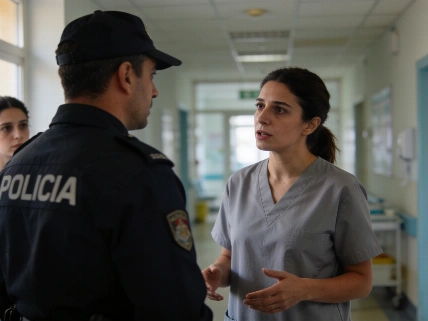
Raids also affected people seeking international protection. At a charging point run by German NGO Mission Lifeline near La Almadraba, police vans arrived as about 40 people waited under a small shelter. Several ran into nearby hills; five were taken to the CATE and others were injured. Omar Hafout was taken to an ambulance with an injured arm. Bilel, who had paperwork for an asylum interview, said he feared the documents would not prevent his removal.
In October, Spain began returning a group of more than a dozen African and Asian asylum seekers to Morocco after their applications had been rejected. The Interior Ministry said Morocco had agreed to receive them and that they were on Moroccan territory. NGOs told Reuters that 16 people had been returned; the ministry did not confirm the number or nationalities. The operation was described as the first such move from Ceuta since the July mass crossing.
The account also described a Yemeni man being expelled after his international protection claim had been refused, despite the National Court having ruled that his appeal period was still open. The next day, a man being returned at the border jumped into the sea and swam towards Ceuta. Moroccan boats caught him after a pursuit, and the return went ahead. The list still recorded his departure as voluntary.
On 27 October, a Spanish judge investigating the July crossing ordered the government to declassify further intelligence documents and reports related to the border surge. The order came nearly three months after the crossing, as the circumstances of the event and the deaths remained under judicial scrutiny.
A separate report covered a proposed change to rules on standing passengers after a coach crash in Catalonia; read the report on bus rules.