On Wednesday 4 November, the programme puts housing on the agenda at 9:00 h and city control of digital infrastructure at 15:30 h. Both sessions are part of the Cities Programme, which runs alongside the 15th Smart City Expo World Congress from 3 to 5 November at Fira de Barcelona’s Gran Via venue. Organizers expect representatives from approximately 1,000 cities, more than 27,000 attendees, over 1,100 exhibitors and 600 speakers. The congress theme is “Urban Solutions, Real Impact.” Its agenda spans enabling technologies, energy and environment, mobility, governance and economy, life and inclusion, infrastructure and buildings, as well as the blue economy.
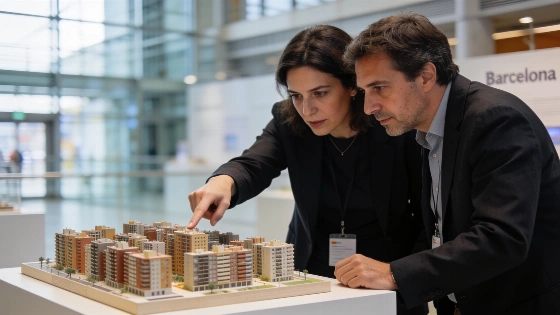
The Housing Mayors Meeting is designed for mayors comparing housing difficulties and policies. Part of HOWS Barcelona | Housing World Summit, it will cover regulation and social and affordable housing, alongside urban planning and land policy. The summit is planned as an international forum with more than 100 experts. Its programme also includes construction innovation and the renovation, rehabilitation and reuse of existing buildings. The mayoral meeting is a closed-door working session. Barcelona Mayor Jaume Collboni is among the reported participants, alongside representatives associated with Milan, Budapest, Athens and Atlanta. Participants are expected to identify possible areas for cooperation.
Later on Wednesday, «Cities Enabling Strategic Autonomy» will examine how administrations can govern artificial intelligence and data, as well as the digital infrastructure behind public services. Discussion will also address how cities select and assess technologies before incorporating them into those services. That includes questions of public oversight, procurement and responsibility for service delivery. The agenda connects municipal digital governance with European strategic autonomy and cities’ ability to manage the systems and infrastructure that support public services.
Closed-door City Peers sessions will bring together municipal officials with similar responsibilities to compare approaches and share practical experience. Reported institutional participants include Bloomberg Philanthropies, C40, the World Economic Forum and Metropolis. Topics include architecture and urban design, public-space transformation, social cohesion, housing, migration and demographic change. The Council of Global City CIOs, a municipal technology and innovation network supported by Bloomberg Philanthropies, is scheduled to mark its tenth anniversary on 2 and 3 November. Its meeting will address governance of AI, data and digital public services.
Other peer sessions will bring together officials responsible for architecture and urban design to discuss public spaces and the transformation of existing parts of cities. Municipal management officials will meet separately to discuss social cohesion, housing, migration and demographic change. The wider Cities Programme is designed to bring together more than 150 public-management professionals for exchanges on mobility, digitization, housing and economic development.
On 4 November, Metropolis and Barcelona City Council will hold the Solutions Lab «Science-Producing Cities». Cities from Europe, Asia and America are due to share innovation policies and ways to turn research and knowledge into urban solutions. The lab is part of a programme that treats research and innovation as tools for meeting practical urban needs.
Climate cooperation is on the agenda on 4 and 5 November. C40 Cities and the Global Covenant of Mayors for Climate & Energy are organising the City-Business Climate Alliance Workshop, focused on public-private cooperation for climate initiatives. Energy, environment and green urban solutions are also among the congress’s main themes. On 5 November, Barcelona Investment Office and the World Economic Forum will convene economic development officials to discuss urban economies facing technological and industrial shifts, alongside demographic change. A further meeting will focus on managing public and social housing, building maintenance and support services for residents.
The city says the programme will complement its stand and the congress schedule with sessions designed to support cooperation between administrations. Barcelona plans to present 70 current and future services and projects across seven municipal hubs: smart mobility, housing, innovation serving residents, simulation and decision-making, security, public space and urban innovation, and climate challenges. Separate coverage of Catalan projects has included a Cabrils installation that translates plant responses into sound and aromas.