At the Academia de Televisión, Pedro Sánchez and Alberto Núñez Feijóo met under rules their campaign teams had negotiated in advance. It was the first and only face-to-face between the candidates of the two largest parties in Congress.
Each candidate had a defined speaking turn and the same amount of time: a minute and a half to make an argument before the other replied. They also agreed on the themes and their order beforehand. The arrangement is part of a longer institutional tradition. The Academia de Televisión says it supplied a common broadcast signal for debates during the 2008, 2011, 2015, 2016 and 2019 election cycles, and made the signal available to interested broadcasters.
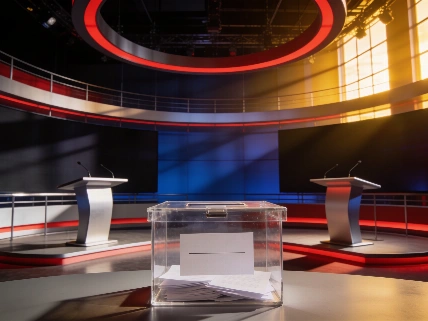
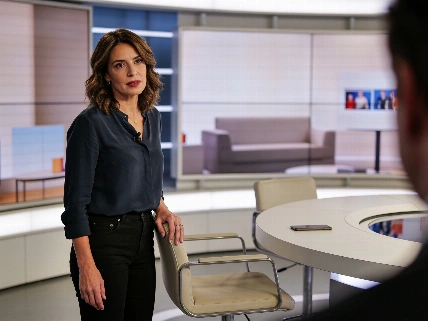
The academy’s later arrangements for the 2026 Sánchez–Feijóo debate offer another example of how those procedures are set. Representatives of PSOE and PP met with the academy’s executive debate committee and agreed by consensus on five thematic blocks, including their order. The debate was scheduled for 22:00 to midnight, with 16 minutes for each block, or eight minutes of speaking time per candidate. Advertising breaks of three minutes were set for after the second and fourth blocks. A draw determined that Feijóo would open and Sánchez would close. Basketball referees from the Madrid Basketball Federation were assigned to monitor speaking times.
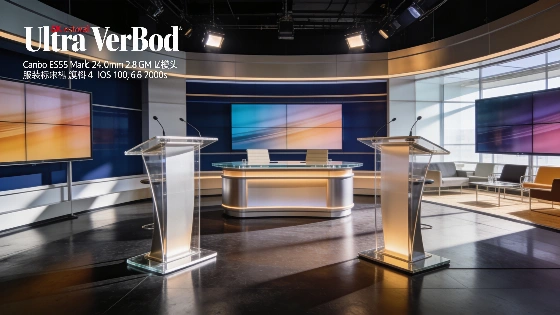
The 2026 encounter was planned for Plató A at Madrid Content City, operated by Secuoya Content Group. Academy president María Casado was set to moderate. The academy said more than 200 professionals were involved in its production and participating broadcasters could use the institutional signal.
That structure makes it easier for viewers to follow each case without interruptions. Candidates also have time to prepare for the subjects under discussion. The trade-off is that rehearsed lines can crowd out direct exchanges, leaving the moderator mainly to manage turns and the clock.
The campaign included other policy arguments. Sánchez’s proposals on taxing funds with empty homes or tourist flats were covered in an earlier campaign report.
US presidential debates have generally allowed a more confrontational style, though they too operate under negotiated rules. The source account cites Nielsen figures putting live television audiences between 50 million and 70 million. A Town Hall format, used in 1992, also lets members of the public question candidates directly.
The difference is not a matter of rules versus no rules. In the US format, a candidate can gain by controlling the screen or unsettling an opponent, even if the performance produces weaker answers. A forceful interruption may attract more headlines than a detailed economic proposal.
Debate formats have changed over time. Richard Nixon and John F. Kennedy met on 26 September 1960. Spain’s first televised democratic election debate followed on 24 May 1993, between Felipe González and José María Aznar. In 1976, debates returned in the United States after the Comisión Federal de Comunicaciones (FCC) changed its interpretation of the rules. That change allowed debates to qualify as legitimate news events exempt from equal-time requirements for every candidate.
Spanish debates have sometimes loosened their structure. The 2015 exchange between Sánchez and Mariano Rajoy included personal insults. Sánchez and Feijóo’s 2023 encounter featured interruptions and accusations. France’s format is closer to Spain’s, with negotiated conditions and equal speaking time. Germany sits between that model and the more open formats used in the United Kingdom.