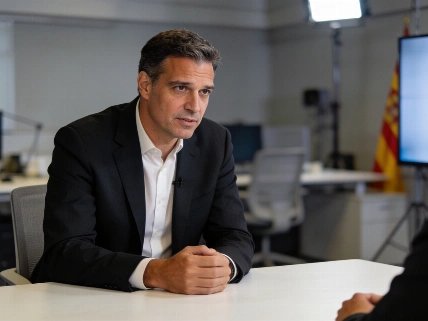
Several Junts per Catalunya figures said they had not been told about Carles Puigdemont’s interview with El Mundo before it appeared. The report said the party leader’s criticism of Pedro Sánchez over the amnesty had been prepared within his close circle, leaving some colleagues surprised by its timing during the campaign. Published on 19 November, the interview came 10 days before Spain’s scheduled 29 November general election.
Miriam Nogueras said she had been briefed. She defended the intervention because it had brought Junts media attention, saying that everyone had been talking about the party. Another Junts voice involved in managing the response said the party needed to make space for itself in the campaign. The Catalan government led by Salvador Illa took the opposite view: its minister of the presidency, Albert Dalmau, criticised Puigdemont’s intervention for helping the PP and Vox.
Puigdemont presented the amnesty as a gain secured by exploiting Sánchez’s political ambition. He described how Junts used Sánchez’s need for parliamentary backing after the 2023 election to obtain concessions, including the amnesty and an international mediator. Junts’ leverage rested on its seven seats in Congress, which formed part of the support Sánchez needed for his investiture. The amnesty concerned proceedings linked to the 2017 independence process, including the 1 October referendum and the subsequent declaration of independence. Puigdemont also said that any state obstacle to applying the law would be treated as a breach of the agreement. His remarks came on the day of the televised face-to-face between Sánchez and Alberto Núñez Feijóo. A separate analysis of televised debates examined how a candidate’s performance can shape a campaign.
The interview dispute reflects concern within Junts about the campaign’s focus on the PSOE and the PP. The party argued that this polarisation was reducing its visibility. Some figures also questioned whether an intervention that damaged Sánchez and the PSOE would translate into support for Junts. Puigdemont said he had not spoken directly to Sánchez, by phone or in person, since going into exile, despite describing the negotiations between their parties.
The electoral stakes were particularly clear in Tarragona province. At a rally in Tortosa, in the Terres de l’Ebre, Nogueras was campaigning in a constituency where polls predicted that Junts could lose its seat. If that forecast held, Josep Maria Cruset, who had served as Nogueras’s number two in Congress, would lose his position.
Puigdemont had said he did not intend to return to Catalonia during the campaign, arguing that a return after nine years in Belgium would amount to “Spanishising” it. He was expected to wait until after the 29 November election before returning, even if courts applied the amnesty to offences related to the 2017 referendum. His interview instead prompted some party figures to ask for an explanation of his intentions. One former senior figure in Congress, who had distanced himself from Junts over Puigdemont’s way of operating, said the comments clearly hurt Sánchez and the PSOE, while their benefit to Junts remained uncertain.