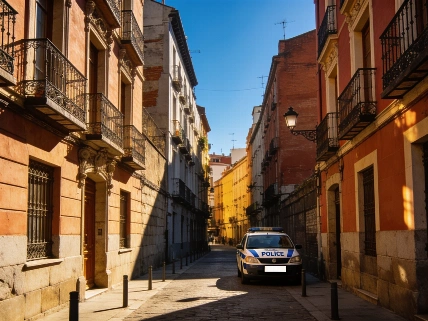
Beasain mayor Leire Artola said the town’s urban plan could make room for 600 homes on railway land near the station. The land belongs to ADIF, she said, so the town would need to negotiate in Madrid before the development could proceed.
Artola said she wanted young people who had grown up in Beasain to be able to build their lives there. She linked that housing goal to the need for a strong Basque parliamentary group in Madrid, which she said could act as a bridge in talks with the central government. That argument was central to EAJ-PNV’s campaign: the party sought to retain a distinct voice in Congress and negotiating leverage on issues affecting Euskadi, rather than align in advance with either of Spain’s main political blocs.
The remarks came at an EAJ-PNV campaign event in Beasain ahead of the 29-N election. Elsewhere in the campaign, PP candidate Jon Echeverría cancelled a Hernani rally after reporting that firecrackers and eggs had been thrown; he separately said stones were thrown, according to this Hernani campaign report. The two events were separate.
Gipuzko Buru Batzar president Euge Arrizabalaga argued that the vote would determine who defended Euskadi in Madrid over the next four years. She presented EAJ-PNV as a defender of Basque families and employment, crediting it with securing autonomy for the CAV and Navarra. She said the party had built Basque institutions and defended Osakidetza and the Basque protection system. The campaign’s slogan, “Defendemos Euskadi. Euskadi Zaindu,” expressed its emphasis on defending the territory and its institutions.
Arrizabalaga said the PSOE’s principle of equality among all Spaniards conflicted with the political rights of Basques. She accused the party of seeking to draw Euskadi into Spain’s polarisation and said EAJ-PNV would resist that. The party also presented itself as a barrier to Vox and to centralising policies, while insisting on a position of its own between the major blocs.
Eneko Goia, the party’s candidate for Congress in Gipuzkoa, attributed the territory’s position as the place in the state with the highest average income per person to its industrial base. He said EAJ-PNV had consistently backed industry in Madrid and described the Grupo Vasco as the only group to have focused on it over the years. The party’s economic pitch included defending the Concierto Económico and the cupo, alongside calls for transfers of powers and efforts to attract investment. It also addressed business needs.
Goia rejected a socialist candidate’s claim that voters faced a choice between PP-VOX and the PSOE. He said voters could instead choose Euskadi and its representation in Madrid. The stakes for that representation were underscored by polling reported by El Constitucional: a SocioMétrica survey published on 15 November projected four PNV seats in Euskadi, against seven for EH Bildu and five for the PSE-EE, while a CIS survey published on 12 November gave the party a range of two to four seats. The PNV had won five Congress seats in 2023, the minimum identified for maintaining its own parliamentary group. Maribel Vaquero, the party’s Gipuzkoa candidate for Congress, described the defence of Basque self-government and established rights as non-negotiable, with completion of the 1979 Statute of Gernika among the party’s institutional priorities.