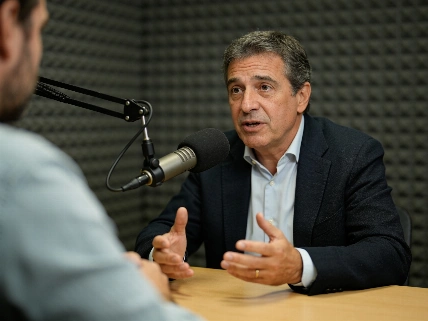
The businessman said two people who were off sick worked with him as autónomos because hiring staff had become difficult. José María Figaredo, Vox’s economic spokesperson, did not ask whether the arrangement could amount to false self-employment. Instead, he joined the businessman’s complaint about the risks of hiring.
The conversation appeared in a campaign video published on Vox Madrid’s X profile. The businessman described the workers as unable to work while they were off sick, then said they were autónomos rather than employees. That account alone does not establish that they were falsely classified. Spain’s employment-status test turns on how the work is organized in practice: whether workers follow another party’s direction, who supplies equipment, who bears commercial risk and who deals with the final customer. Registration as self-employed in the Special Regime for Self-Employed Workers, or RETA, does not by itself rule out an employment relationship. A possible disguised employment relationship can constitute labour fraud, making the exchange relevant to the party’s economic message.
Spain also recognizes economically dependent self-employed workers, known as TRADE. The category requires that at least 75% of a worker’s relevant income come from one client, alongside other statutory conditions; economic dependence alone does not determine whether the relationship is employment. Eduardo Abad, president of the Unión de Profesionales y Trabajadores Autónomos (UPTA), accused the businessman of using false self-employment. Vox later deleted the video. Former regional Podemos MP Carolina Alonso also described the workers as false autónomos and accused the owner of tax non-compliance. The exchange has also been covered in earlier reporting.
The political context extends beyond the clip. Santiago Abascal has responded to questions about trains by saying he is not an engineer, and to economic questions by saying he is not an economist. He has also disclaimed expertise in geopolitics and military strategy. During a campaign interview about how pensions could continue to be paid while rights were respected, he said he did not know the precise answer and that technicians would provide it.
Vox does have a position on pensions. The party’s 2018 declaration of principles called for a mixed system combining capitalization and pay-as-you-go financing. Its economic and housing programme, approved at the party’s June 2025 general assembly, proposed starting to capitalize a public pension fund using private-sector profitability criteria and moving towards a model similar to Sweden’s. Figaredo has defended a structural reform combining the existing pay-as-you-go system with individual capitalization, and rejected the claim that Vox wants to abolish public pensions.
A 2019 Vox economic programme set out a transition based on contributors’ ages: people under 25 and new affiliates would direct half of their contributions to state-regulated private pension-fund administrators; those aged 25 to 45 could choose between that arrangement and the existing system, while people over 45 would remain in the pay-as-you-go model. The programme envisaged phasing out that system over several decades. In a separate campaign debate reported by laSexta, Figaredo said a future Vox government would guarantee pension payments to current pensioners and younger generations. He also linked the system’s sustainability to what he called mass migration. Abascal’s remarks leave the detail of the current proposal to technical advisers, while the campaign video shows Figaredo declining to examine a possible employment-status issue raised directly in conversation.