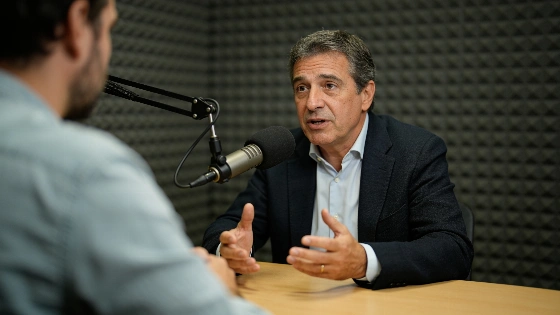
Jordi Wild interviewed Alberto Núñez Feijóo a day after Santiago Abascal failed to appear, Jordi Évole recalled on La Mesa. He pointed to the back-to-back conversations as an example of the work involved in bringing political candidates onto a long-form podcast. Wild’s conversations with Feijóo, Pedro Sánchez and Ada Colau were published on 13 November, at the start of the campaign for Spain’s 29 November general election. Recorded at Wild’s home in Manresa, the episodes came out in sequence: Colau at 08:00, Feijóo at 10:00 and Sánchez at 12:00.
Évole, speaking on the programme presented by Susana Griso, defended candidates taking part in formats beyond conventional television. He said they could reach audiences who do not watch TV, citing his own son, who gets information through social media and viral clips. Colau also described Wild’s audience as including young people, whom she said politics often overlooks.
Pedro Sánchez and Alberto Núñez Feijóo appeared on the podcast, as did Ada Colau. Abascal was absent. The Vox leader had initially accepted Wild’s invitation; reporting attributed his withdrawal to disagreements over the management of image rights. Évole said he was struck by how quickly Feijóo and Abascal had initially accepted Wild's proposal. He then asked his son whether left-wing representatives would do the same. His son urged them to go.
Évole said he messaged Pedro Sánchez to encourage him to take part. The prime minister did not reply, according to Évole. The audience figures for the conversations were examined in an earlier view-count report. The episodes drew substantial online audiences: El País reported that each had averaged more than 70,000 simultaneous viewers during its initial broadcast and passed two million views by that evening. By 18 November, Noticias de Navarra reported about eight million YouTube views for Sánchez’s interview and approximately 6.8 million for Feijóo’s.
Évole also praised Wild's willingness to discuss what had gone wrong. He said real-time fact-checking can be difficult in a long, free-flowing conversation: by the time a check arrives, the discussion may have moved on. Together, the three conversations lasted six hours. That gave the candidates room to discuss political and personal topics beyond the scope of short television segments.
After the interviews, Wild publicly acknowledged problems with the fact-checkers and his tone during the conversation with Ada Colau about murdered women. Évole praised that self-criticism on La Mesa. Wild also reviewed the interviews publicly on 14 November, saying they had changed some of his impressions of the candidates but had not persuaded him to vote for any of them. He described Feijóo as more agile than he had expected.