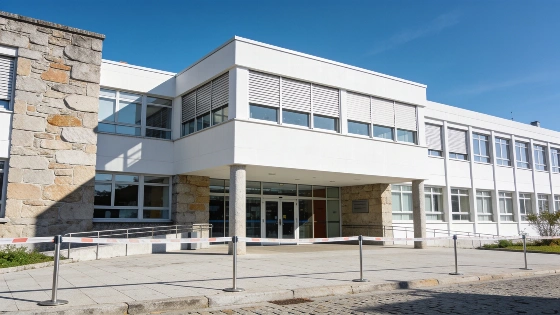
The email warned: «Minamos el edificio de mashe. Si desea salvar la vida de los estudiantes, abandone el edificio». On 18 November 2026, more than 30 schools in Galicia received the message, prompting bomb alerts and a major security operation as buildings were evacuated. The National Police said the emails had been sent directly to schools. Europa Press later reported that at least 45 schools across Galicia were evacuated and searched, including up to 31 in A Coruña, among them CEIP Zalaeta and Colegio Plurilingüe Compañía de María.
Spain’s Government Delegation in Galicia said schools and secondary institutes received the same email at the same time. The near-simultaneous warnings arrived around midday. Schools contacted the National Police, who cleared the buildings and searched classrooms and other areas. Staff raised the alarm after finding the message. Some emails landed in corporate spam folders, while some schools were not evacuated until later in the afternoon. Specialized police units found no suspicious devices.
When the report was published, investigators had not identified the sender. The National Police and Civil Guard were investigating. The National Police initially confirmed evacuations at more than 10 schools; the regional tally reported by Europa Press later reached at least 45. Authorities had ruled out real explosive devices in the affected countries, but had not established who was behind the threats.
Galicia was the first Spanish region where threats of this kind targeted so many schools at once. Earlier isolated cases had been reported in Gran Canaria. Incidents were also reported around schools in Mataró and Murcia.
The pattern recalled a wave of threats in Italy the previous week. ANSA reported that an email received at about 10:00 on 11 November targeted approximately 6,300 of Italy’s 7,476 state schools, warning that a powerful remotely detonated device had been placed in a building. No explosives were found. Around 6,000 schools there were evacuated after receiving a signed email warning that a building had been mined. Another message came from someone using the name «Mikhail Andropov, líder del Vilayat de Misoginistán» and alleging «un genocidio contra los italianos». After threats arrived on three non-consecutive days, Georgia Meloni’s government urged schools to stay open and continue normal activities.
On 13 November, Italy’s Interior Ministry issued guidance telling schools that mass-distributed bomb-threat emails should not be considered credible. A further wave reached schools in several Italian cities on 16 November; ANSA reported no evacuations at the time. The messages reportedly threatened an explosion in 40 minutes and were signed «M.A.». Schools in the United Kingdom and Ireland also received similar warnings the previous week, affecting around 2,000 institutions. Across the European incidents, the emails triggered security responses, but authorities found no actual devices. A separate report on the FAA ground stop covered an aviation communications failure; it was unrelated to the school threats.
In Spain, falsely claiming or simulating a danger to the community can bring criminal penalties if it mobilises emergency services. Article 561 of the Penal Code provides for up to one year in prison and a fine lasting from three to 18 months.