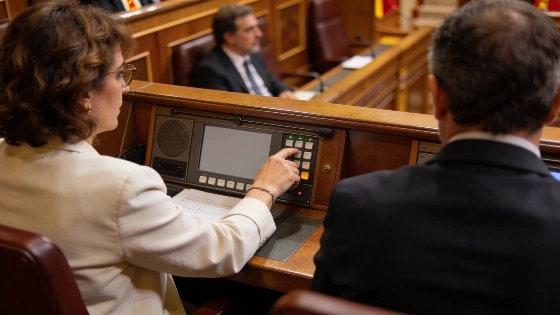
The package includes €182.2 million for areas hit by DANA Adam and €45.32 million in direct grants for Ceuta. On 18 November 2026, the Permanent Deputation of the Congress of Deputies approved seven royal decree-laws covering those measures. The package also changes social protection and dependency services, while a separate measure addresses railway safety. The vote preserved emergency aid and social-policy measures adopted after Parliament’s dissolution, during the final stretch of the campaign for the 29 November elections.
The Ceuta funding is intended to help maintain essential services amid increased pressure following a surge in migrant arrivals that began in late July 2026. During the debate, socialist MP Begoña Nasarre defended the government’s support for the autonomous city, saying it had provided assistance and backing mechanisms since August. Territorial Policy Minister Ángel Víctor Torres also defended the €45.32 million in extraordinary support, linking it to costs arising from the migration crisis.
For DANA Adam, the approved measure addresses flooding and related damage caused between 17 and 19 October across several Spanish territories. The €182.2 million package includes €70 million for emergency works. It also provides tax benefits for damaged properties and businesses, as well as compensation for farmers. The measures cover agricultural support and repairs to hydraulic infrastructure and the maritime-terrestrial zone. They also extend assistance to businesses in commerce, tourism and hospitality. MP Patricia Blanquer used the debate to call for a state pact on the climate emergency, arguing that prevention and coordination between administrations were necessary to protect the public. Her remarks were a political appeal, separate from the aid covered by the decree-law.
Other measures concern the social security system and families. MP Esther Peña said the changes address protections for families and workers. They also cover orphans affected by gender violence and women’s health. A separate decree-law implements the reform of Spain’s System for Autonomy and Dependency Care and sets state-financing parameters for 2027. Reported monthly minimums range from €90 to €660 per beneficiary according to dependency grade, while €904.2 million is allocated to the agreed financing level shared with Spain’s autonomous communities. MP Carmen Martínez said state funding for the system had increased by 400% under Pedro Sánchez’s governments.
The package also gives legal recognition for the first time to female-led single-parent families, alongside other family support measures. MP Milena Herrera cited official figures showing that 43.4% of these families have incomes below the poverty threshold. The Permanent Deputation’s approval kept these family and social measures in force.
Rail measures are intended to strengthen operational safety and improve protections for railway workers. MP Manuel Arribas said they also aim to restore users’ confidence. A separate decree-law provides aid to victims and relatives of the accident in Urda, Toledo, with compensation reported to range from €2,404 to €84,141 according to the category of harm. The two Urda measures address victim assistance as well as railway safety, including protections for railway personnel. An earlier report on Adamuz victims’ support proposals concerned a different accident and should not be confused with the Urda aid measure.
MP César Ramos said the state should respond to accident victims quickly and effectively. He also cited four transport laws approved during the legislature, including one intended to advance the creation of an independent accident-investigation body. The PP voted against that law. The seven decree-laws remained in force after the Permanent Deputation’s approval on 18 November.