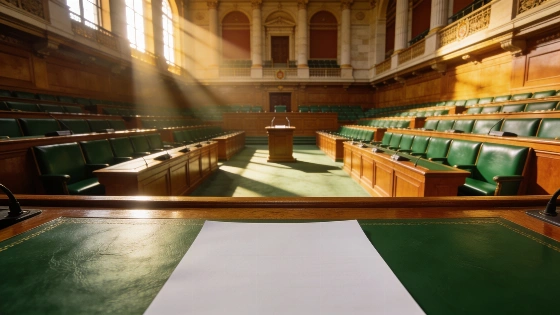
The declaration says the legislature is ending without new General State Budgets for three consecutive years. Its authors link that failure to weaker parliamentary scrutiny and declining attention to public administration. Published on 18 November 2026, it appeared ahead of the general election scheduled for 29 November.
Dated in Barcelona on 18 November, the 12-point document brings together 150 signatories. El Confidencial reported that it had obtained the text. The signatories include former socialist minister José Luis Corcuera and former Senate president Juan José Laborda. UPyD founder Rosa Díez signed, as did philosopher Fernando Savater. Constitutional scholar Francesc de Carreras is also among them. The manifesto calls for democratic regeneration and institutional independence. It also seeks greater dignity in politics, alongside a new period of concord.
Former politicians from PSOE and PP joined the initiative. Ciudadanos and UPyD were also represented, alongside figures from moderate Catalanism, academics and professionals. The initiative began in Catalonia, where several signatories have previously defended constitutionalism against the independence movement, but its appeal addresses Spain as a whole. Among the names are former Ciudadanos leader Jordi Cañas and former Catalan minister Antoni Fernández Teixidó. Former Ciudadanos secretary general José Manuel Villegas also signed. The list includes former state prosecutor general Eligio Hernández, as well as Catalan political figure Josep Miró i Ardèvol.
The manifesto argues that the balance between state powers has weakened and that governing has become too focused on retaining power. It puts the 1978 Constitution and the consensus of the Transition at the centre of its proposals. The signatories call for respect for the opposition and more parliamentary deliberation. They also argue that judicial independence needs protection. The declaration urges a new political stage, rather than presenting a party platform or legislative proposal.
Its sharpest institutional criticism concerns what it calls the partisan use of public bodies. The text alleges that the Government and the prime minister benefit from control of the Tribunal Constitucional. It also claims the Fiscalía and the Abogacía del Estado have been colonised and turned into instruments serving them. These are the signatories’ claims, not judicial findings.
The document cites the Ceuta border crises of 2021 and 2026. It also points to the power blackout and road conditions. The rail disasters at Adamuz and Urda feature in its case for making infrastructure safety a state priority. The signatories object to responsibility being assigned on the basis of political affinity instead of competence.
On corruption, the signatories refer to investigations involving people linked to the Government and its allies. They call for transparency and verifiable information. Political or criminal responsibility should follow where warranted, they say, while the presumption of innocence must be respected. That principle is distinct from the case of two Jardun members in provisional detention covered in this terrorism probe report.
The declaration asks for independent justice and transparent appointments, alongside parliamentary oversight and budgets subject to debate. It seeks to strengthen the independence of institutions. The text also calls for renewed concord and greater dignity in political life. It does not endorse a specific party. Instead, it urges voters to choose freely and responsibly ahead of the general election on 29 November.