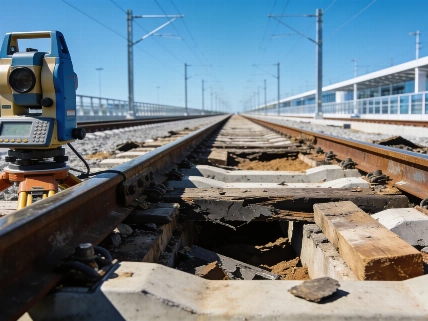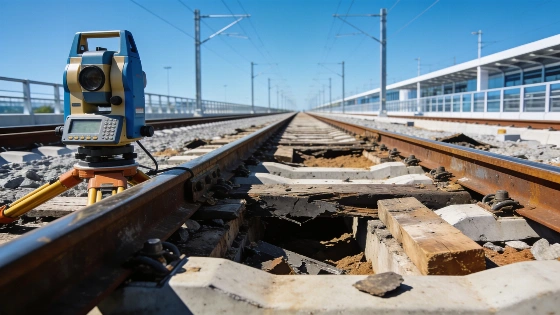
The collision near Urda, between Urda and Los Yébenes in Toledo, left the damaged track on the Madrid-Seville line part of a criminal investigation. The affected area was at kilometre 118 of the high-speed route. On 19 November, 22 days after the 28 October crash, the judge authorised ADIF, Spain’s public rail-infrastructure administrator, to rebuild the section. The collision involved a Renfe AVE train and an Iryo service. It left 69 people dead and more than 200 injured.
The order requires ADIF to document the damage found during inspection and topographical work. After reconstruction, it must identify each component changed, including anything repaired or replaced, and give the precise location of every intervention. The records will join the judicial investigation, which remains under judicial secrecy.
The prosecution requested a complete inventory of affected elements before repairs to preserve evidence. Judge Aristea Afroditi Ortiz Tiliakou, of Court of Instance Orgaz’s Civil and Investigating Section No. 2, also ordered an inventory after the work. Together, the two records document the site before and after intervention while the investigation continues.
The ruling followed ADIF’s request to repair the accident site. On 3 November, then Transport Minister Óscar Puente told Congress that the work was expected to take no more than 10 calendar days from judicial authorisation. He said it was too early to predict when the lines would be clear. That estimate was not a reopening deadline. The court’s subsequent order set no date for the start of work or the resumption of services.
The High Court of Justice of Castilla-La Mancha confirmed that the decision had been notified to the parties but gave no start date for repairs or timetable for resuming train services. Judicial permission cleared ADIF to work under the required evidence-preservation measures. It did not reopen the Madrid-Seville line.
The ruling covers the accident area but does not specify how much track must be rebuilt, which materials must be replaced or what the work will cost. Nor does it set technical conditions for restarting services. At the time, the government’s plan provisionally scheduled completion of the European Ertms level 2 protection system and an extraordinary safety audit for early 2027. The government had said frequencies on the Madrid-Seville line would remain reduced until those measures were complete.
The crash happened at 8.53 on 28 October at kilometre 118.800 of the Madrid-Seville line. An AVE train struck an Iryo train stopped before Urda’s entry signal. The investigating authority put the impact speed at between 160 and 200 kilometres per hour, pending confirmation from the train recorders. Puente told Congress on 3 November that 69 people had died and about 200 had been injured.
Rescue and recovery work continued alongside evidence gathering. On 1 November, the judge requested more staff from the company contracted to remove the trains after work stopped overnight for lack of personnel. The court wanted to speed up the search for possible victims’ remains.
At that stage, the case was under judicial secrecy. The Civil Guard held the extracted train recorders, while Aitat, the independent railway, maritime and civil aviation accident investigation authority, examined the collision and the decisions made before impact. Its technical investigation identified a fault in the LZB protection system at 8.31. Trains then operated using trackside signals. At 8.36, the Atocha control centre authorised the AVE to continue at normal speed while the Iryo remained stopped. Five minutes before the collision, the Iryo driver again reported being unable to move. Responsibility had not been determined.
On 6 November, Aitat issued three preventive recommendations. It proposed temporarily requiring trains to proceed at sight after a failure of the main protection system and reviewing control-centre protocols. It also called for an assessment of risks in the backup system, while stressing that the measures did not anticipate the investigation’s conclusions. The Urda case is separate from other rail infrastructure coverage, including this report on the San Sebastián tunnel route.